
Business Growth
How I Grew My LinkedIn Service to a $74K Month With Proof and Follow-Up
· Updated
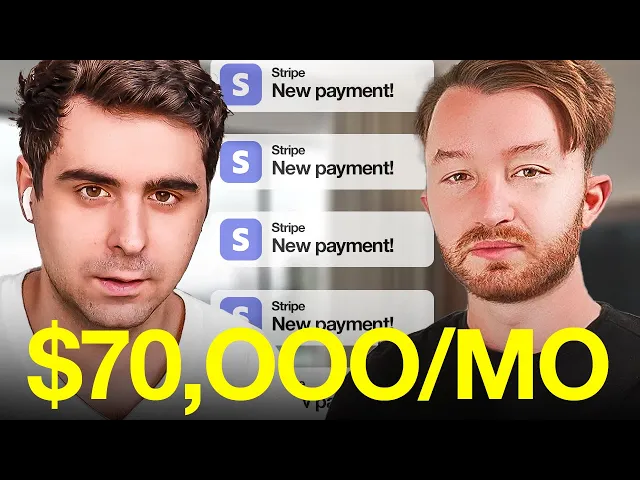
I'm Sam. I help business-to-business leaders present themselves compellingly to their target market, with LinkedIn as a central channel. At the interview, I reported about $74,000 in revenue for the previous month. The month before joining Client Ascension was around $20,000, while my earlier peak had been about $35,000.
I already had inbound attention from LinkedIn. The work was becoming more deliberate about the proof on the website, follow-up, outbound and the systems behind the service. The monthly figures were my revenue account, not profit, MRR or proof that one change alone caused the increase.
I made the results I already had easier to see
I already had useful client results and recognizable people in the portfolio, but I needed to turn those into compelling case studies. Once I did, I found them useful across the channels where prospects decided whether to work with me.
I later used website session recordings and could see people going to the case studies. That helped me understand the attention they received; it was not a controlled experiment measuring exactly how much extra revenue the pages created.
Client Ascension related reading: Jeff's CRO agency case study describes landing-page work, Twitter content, referrals and a more structured sales process. His figures are separate from mine.
LinkedIn inbound was not the same thing as a finished sales process
Before joining, most leads came through my LinkedIn presence, with some messages but not much organized outbound. I added cold email and was surprised by how effective it could be for the offer.
I also became more deliberate about follow-up. Someone could see me repeatedly and still need a real conversation before deciding to work together. Having an audience did not mean every interested person automatically booked or bought.
Outreach still had operational interruptions
We had a period when the email infrastructure stopped working and needed a reset. At the interview, the new campaigns had only just restarted and were getting positive responses.
That was a recovery in progress, not proof that email was uninterrupted or that the responses had already become clients. Ads were something I wanted to explore, not an established source of results in this account.
Client Ascension related reading: the acquisition guide explains choosing a channel for an offer and evaluating cost per client over a full sales cycle.
A CRM gave follow-up a place to live
I had worked with a few spreadsheets before, but not much of a system. I started using a sales CRM and built a basic internal CRM too. The internal version was simple, but it gave me something more structured than what I had been doing.
My LinkedIn content became more targeted as well. I wanted to be more intentional about showing the work and credibility rather than making content that was only broadly appealing.
Delegation was underway, but the client-manager hire was not finished
I had been hesitant to delegate because the work felt too niche to hand over. Once I started delegating, I realized someone could do a role better than I could, either through skill or through having more time to focus on it.
Andre shared resources, and I was interviewing for my first full-time client manager. I had narrowed it to two strong candidates; the hire was not completed yet. That was different from the writers already working with me.
A bigger business did not mean I had stopped working
I was busier than before, but the work felt more meaningful and higher leverage. Some recent time had gone into making the business more data-oriented; outside that work, more of my attention was on development, follow-up and sales conversations.
I still expected to handle the most important client sales conversations myself. A larger sales team, more channels and a first six-figure month were future work, not outcomes I had already achieved.
Adapted by Client Ascension with AI assistance from Sam's interview. The first-person narrative follows the source speaker’s account. Watch the original video





