
Agency Growth
How I Built Cold-Calling and SDR Services Around Client Demand
· Updated
I'm Dylan Rich. I help smaller and mid-sized SaaS and software companies build sales systems, including cold email, LinkedIn and cold calling. The work can include the playbook, scripts, contact data, CRM integration and the people needed to run the process.
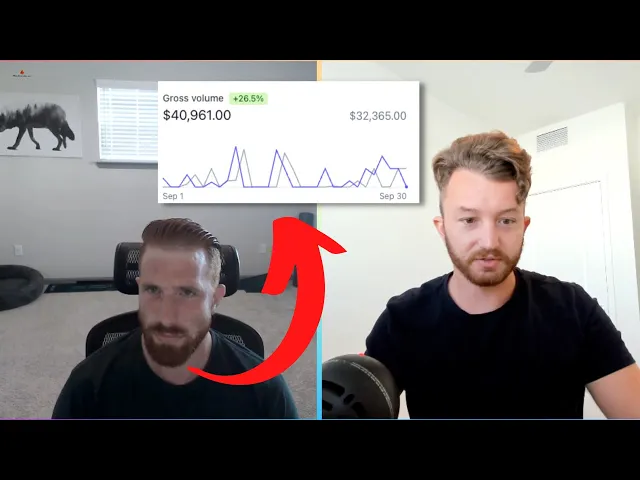
Daniel introduced the agency at around $41,000 a month and said I had been in Client Ascension for about seven months. I had left my job the previous December and described being full-time for almost a year. Those are different timelines, and the monthly business figure was not a profit result or proof of starting from zero exactly seven months earlier.
Client requests pointed toward cold calling
I had been delivering cold email and LinkedIn work, and clients kept asking whether we could provide a cold caller. Listening to that demand led us to build a separate SDR training and placement business: find people, teach them sales and connect them with clients.
My own background included a lot of cold-calling practice. I understood the work and what could go wrong, which mattered when the offer became training and placing someone else rather than only sending messages.
Placement and outsourced delivery were different offers
One option was a direct SDR placement inside the client's business. The other was an outsourced model where we retained the SDR, wrote the scripts, managed the work and reviewed call recordings, while the client received meetings on the calendar.
The distinction affected what we were responsible for. Providing a person for the client's team was different from managing the ongoing calling system ourselves. The interview mentioned a placement guarantee but did not provide its full terms or a standard price.
Client Ascension related reading: Brook's agency pricing article describes a different business working through responsibilities in a performance offer. It is a comparison of service scope, not the same contract or guarantee.
We used the sales system ourselves
Our own team used cold calling to book conversations for the service. A prospect who joined a meeting booked by our caller had seen the mechanism in action. That was a useful way to explain what we could help build in their business, without claiming it guaranteed their results.
Twitter and LinkedIn also helped build credibility. Somebody could look us up, read the content and see how we thought about the work. I described referrals and partnerships as another part of the flow, rather than one channel accounting for every client.
Client Ascension related reading: the acquisition guide connects channel selection, offer and the sales conversation. It gives context for using an operating example as part of selling the service.
The ability to sell did not remove the delivery constraint
Our main constraint at the interview was finding and training good SDRs and appointment setters. Bringing in more clients without the people to fulfill the work would create a problem. We were focused on the training material and the pool of people we could place.
The business moved through periods of signing clients, delivering the work and then rebuilding the delivery pipeline. That balancing act was why I did not treat stronger sales alone as proof we could immediately handle a much larger agency.
Client Ascension related reading: Nick's email agency case study describes hiring and a shared system in another service. It offers a separate example of organizing delivery as the founder's workload changes.
A narrower focus made the work easier to repeat
I advised being more selective about clients. Somebody wanting to hire us did not automatically mean we should accept them. Trying to be only fairly good across several industries could drain time and resources compared with getting much better at one thing.
I also talked about understanding the value of the work and changing an offer that required too much delivery for too little money. The price examples in that discussion were illustrations, not the actual fee schedule of every client in our business.
Retention, fulfillment systems and hiring became more important as the business grew. Closing a deal was not the same as keeping the client and delivering the service well.
I tried to control the daily work instead of the forecast
I did not begin with a fixed date by which the business had to reach a particular number. I wanted to work consistently and focus on the actions I could take each day. The larger revenue figures discussed for the future were goals, not later results already achieved.
The community gave me direct feedback across operations, copywriting and content, as well as relationships with people working on similar problems. That was the support I described, rather than a claim that a course alone removed the work of building the business.
Client Ascension related reading: the AI Assisted Agency program page has current offer details. This historical service-business account does not establish current program terms or promise the same revenue outcome for another operator.
Adapted by Client Ascension with AI assistance from Dylan Rich's interview. The first-person narrative follows the source speaker’s account. Watch the original video





