Entrepreneurship
How I Would Start a Business If I Could Start Over
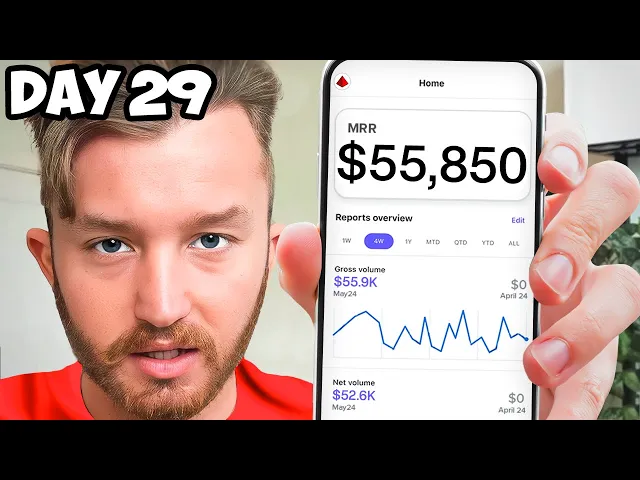
I run a high seven-figure consulting and software business with 28 people. If I had to start from zero today, here's exactly what I'd do — and more importantly, what I'd stop believing.
Step 1: Don't Just "Learn a High Income Skill"
You've heard it a thousand times: pick a skill, sell it as a service. I'm here to tell you that advice is incomplete — and that gap will kill your business before it starts.
Let's say you decide to learn web design. You get really good at it. Now what? You still need to get people to your site, write copy that converts, close sales calls, manage clients, and eventually hire people. If you only know how to build websites, you have the prettiest site in the world that nobody visits.
What actually works is what I call the spider web approach.
When I started, I needed to learn web design. But that led me to landing pages, which led me to a comparison between Leadpages and ClickFunnels, which led me to a Russell Brunson webinar, which led me to buy a $1,000 course bundle that taught me copywriting, funnels, and traffic generation.
What I thought was going to be a web design business became a Facebook ads agency. Then I got tired of how expensive paid ads were and started experimenting with organic Instagram marketing — which became my first real business. I hit $12,000 per month at 20 years old.
That only happened because I had minimum viable competence across eight different things: building funnels, accepting payments, writing video sales letters, email copywriting, email automation, organic content, and cold outreach. I could sell one of those as a service because I understood all the others around it.
The lesson: you don't need to master one skill in isolation. You need enough competence across the whole system to make any part of it work.
Step 2: Don't "Pick a Niche" — Find a Real Problem
When people tell you to pick a niche, most beginners take it too literally. They pull a random industry out of a hat, try to force a skill onto it, and then discover the problem they're trying to solve doesn't actually exist for those people.
Example: someone decides to run Facebook ads for plumbers. They quickly find out that most plumbers are booked solid for months. They don't need more leads — they need employees. The right offer would be recruiting, not advertising.
So instead of picking a niche, find a real problem that real people are actively trying to solve right now.
Here's how I'd do it: pay attention to the ads you keep seeing.
Before you open Instagram or scroll TikTok, you're getting hit with ads constantly — and most people ignore them. Don't. If you keep seeing the same ad over and over, that business is getting a return on their ad spend. The offer is working.
Think of it like buying a house. A month ago I had no idea what a good deal looked like. But after weeks of checking Zillow every day — watching what listed, what sold, what prices moved — I could instinctively spot a good offer. The same thing happens when you study ads.
Click on them. Opt in with a real email and phone number. See what they say to you. Watch the follow-up sequence. Understand what they're selling, who they're selling it to, and how they're pricing it.
If they're still spending money on those ads, the offer works. That means there's a real pain point in that market being solved right now.
That's what "pick a niche" actually means — understanding what people are buying, why they're buying it, and what problem sits underneath the transaction.
Stop Thinking Like a VC-Backed Startup
A lot of new entrepreneurs think building a business means pitching investors, raising funding, and trying to create the next Facebook. That's not the goal here.
The goal is $30K to $50K a month. A sustainable business that pays for your life and gives you actual freedom. You don't need a moonshot — you need a real offer that solves a real problem for real people who are already buying.
How It Compounds
Once you get your first client and take them from point A to point B, you have a case study. That case study becomes a YouTube video, a written document, or a video sales letter you can distribute everywhere. Proof that you've done it once makes it significantly easier to sign the next client.
Then that client tells you about a new problem they have. You go learn what you need to solve it. You get another case study. You prospect for another person with the same problem. You sell them the offer. You repeat the loop.
This is how real businesses are actually built — not by nailing one skill, but by staying close to real markets, solving real problems, and letting your competence expand in response to what clients actually need.
The Summary
Build minimum viable competence across the full system — not just one isolated skill.
Study the market by watching and engaging with ads to find real problems people are actively buying solutions to.
Formulate those skills into an offer that takes someone from point A to point B.
Use your results to create proof, then use that proof to sell the next client.
That's it. That's how I'd start over.