
Agency Growth
How I Design an Offer for Buyers Who Do Not Know Me Yet
· Updated
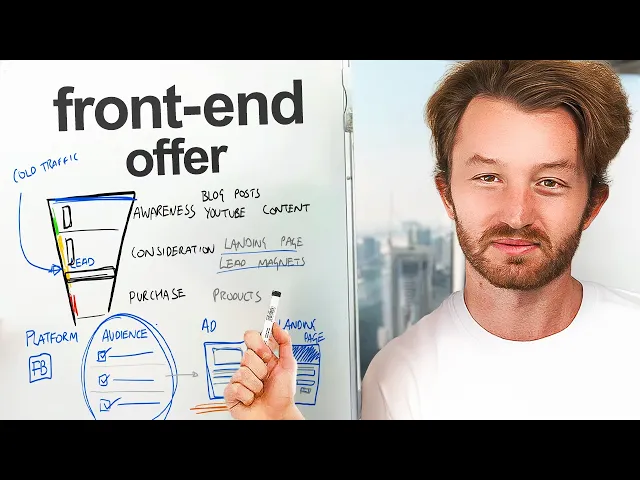
An offer sold to an audience that already trusts the provider has a different starting point from an offer shown to a stranger. If I copy the first without the audience or prior evidence behind it, I should not assume the same words will work. I need to explain the result the buyer wants, what the engagement includes and how the buyer's risk is being addressed.
Account for the trust that a warm audience already has
I distinguish people arriving through an established audience from people with no previous relationship with the business. The established audience may reflect years of useful content or substantial acquisition work.
That is why I do not want a beginner to copy a vague offer from an established provider without considering what the provider already has. The offer needs to make sense to the actual person receiving it, not to a hypothetical audience that already trusts me.
Separate a first purchase from a supplemental service
Some services make sense after a customer has already bought something else. I use a conversation with an analytics specialist to make the distinction: he saw clients receiving data analysis at his employer and wanted to sell that service himself.
When I asked how those clients first arrived, the answer was webinar-funnel work. The analytics supported that engagement; it was not the original offer bringing the customer in. I wanted him to distinguish useful work inside delivery from the proposition that starts the sale.
Explain what the buyer wants to change
Calling the team experts or saying we run ads tells the prospect about the provider. I want the explanation to concentrate on the buyer's objective, such as acquiring customers, and the commercial reason to purchase the work.
That means being specific about the proposed result and its economics. A buyer wants to understand what happens after paying for the service and the ads, rather than only hear that the agency knows how to operate a platform.
Client Ascension related reading: the value proposition guide separates the desired outcome from the service's deliverables.
Answer the question about what happens if it does not work
The next question I describe is the buyer asking what happens if the result does not arrive after the money has been spent. I propose risk reversal as part of answering that question.
In the example, the client must have fulfilled its own obligations, and the proposed remedy is returning the agency's retainer when the agency fails to produce the agreed result. That is different from refunding every expense or promising that all businesses will achieve an advertised return.
Compare upfront payment with payment as results are delivered
I use an appointment-setting example to compare a batch retainer with performance-based billing. In the illustration, $3,000 is associated with ten appointments; another version charges $300 when each appointment is booked.
The example changes the timing and basis of payment. It is about appointments delivered, not signed customers or sales collected. The numbers are proposed terms in the lesson, not a current rate or evidence that ten appointments have already been produced.
Make the outreach and the offer support each other
My broader argument is that cold outreach needs an offer designed for an unfamiliar buyer. A clear outcome and an understandable treatment of risk give the message something concrete to explain.
That is the distinction I want to preserve: a cold-traffic offer starts a relationship, while other services can become relevant after trust develops.
Client Ascension note: The buying scenarios in this lesson do not establish that every prospect chooses the cheapest option or that a particular outreach message will close a sale.
Client Ascension related reading: the solo-business offer guide discusses service formats, manual and automated tasks, and offer design.
Adapted by Client Ascension with AI assistance from Daniel Fazio's lesson. The first-person narrative follows the source speaker’s account. Watch the original video





