
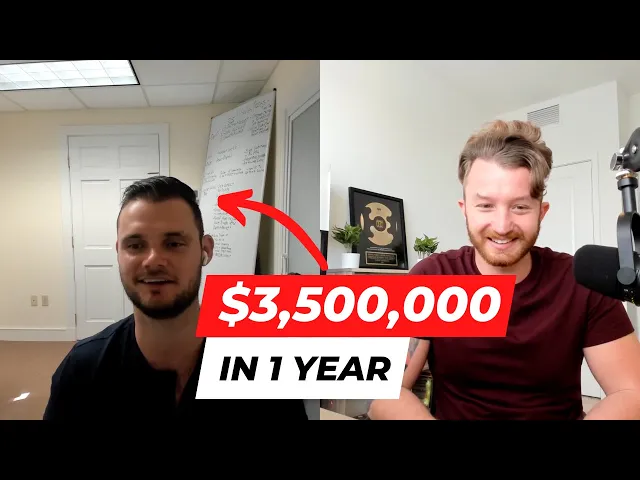
How I Took a Green Energy Contractor From $900K to Nearly $3.5M
I'm Chandler. I run a green energy contractor for commercial real estate: energy-efficiency projects such as LED lighting, low-flow plumbing, EV charging and solar installations. The business did about $900,000 in revenue in 2021 and finished 2022 just shy of $3.5 million.
I bought the business in May 2021 and joined Client Ascension in early 2022. What I applied was a more systematic way of generating conversations and selling projects inside an existing physical-service business. Those are annual revenue figures from my account, not profit or a controlled measure of how much growth any one change caused.
We sold and managed projects without keeping installation labor in-house
We did not have in-house installation labor. The company acted as a sales and project-management platform and subcontracted the physical work. That let us complete projects across different locations rather than being limited to one local installation crew.
The work was still physical. Supply chains, changing prices and labor availability could affect delivery. Making the sales process more digital did not remove the practical constraints of doing an energy-efficiency project.
I put a business-development process inside the contractor
Instead of starting a separate agency, I used the lead-generation lessons inside my existing company. I could identify prospects in the industry and locations we wanted, reach out by email and get the right people into a conversation.
Christian and the team helped with the email campaigns. Connor helped me work through the sales script and improve how I handled those calls. It was a way to bring a repeatable process into a vendor market where much of the business development I saw was more traditional.
Client Ascension related reading: the acquisition guide explains choosing a channel that fits the offer and evaluating cost per client over a full sales cycle.
A repeatable sales process still needed delivery capacity
Once demand grows, the constraints can move into operations. In our kind of business, a shortage of materials or the right labor can matter just as much as the ability to get another prospect on the phone.
My approach was to grow demand until it exposed what operations could not yet handle, then work on the operation before pushing the next stage of growth. It was how I described running this business, not a suggestion to ignore existing clients or take work we could not deliver.
Knowing the jobs helped me know whom to hire
The business I bought was a turnaround. I had been deeply involved in the day-to-day work and joked that I had bought several jobs rather than one. Doing those roles taught me what the problems looked like and what kind of person could take each responsibility.
A key sales-side hire gave me back about twenty hours of my week, by my estimate. It freed me to focus more on bringing in new clients rather than doing every piece of the process myself.
Client Ascension related reading: Kade's analytics-firm case study separates enterprise leads, active opportunities and signed projects in a different business. His figures are not evidence of our revenue.
The next growth level and a possible exit were still plans
I wanted to keep growing the company and building the team. We discussed a possible eventual sale, but I had not sold the business. The future revenue numbers and possible exit values in the conversation were possibilities and goals.
The practical change was having an existing service to sell, a process for starting more conversations and people who could take responsibility as the operation grew. It did not turn the contractor into a business with no work left to do.
Adapted by Client Ascension with AI assistance from Chandler's interview. The first-person narrative follows the source speaker’s account. Watch the original video





