Sales & Outbound
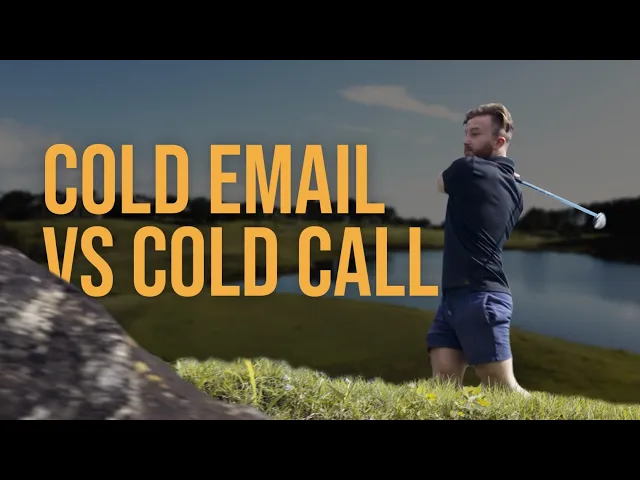
Cold Email vs. Cold Calling: Why the Best Salespeople Use Both
The Debate Everyone Gets Wrong
People love to argue about cold email versus cold calling like you have to pick a side. You don't. And if you do pick one, you're leaving money on the table.
Here's my honest take after scaling outbound across multiple businesses: both channels work, but they work differently — and the people who respond to each one are completely different humans.
Why Cold Email Wins on Volume
Cold email is easier to scale. That's just the truth. You can build a solid script for a specific niche, pull a targeted lead list, spin up 10 domains, and let it run. The infrastructure is repeatable. Once you dial in the copy for a particular audience, you can roll it out without much hands-on effort.
That's exactly why there are more cold emailers than cold callers. The barrier to entry is lower. You don't need to find someone who thrives on rejection and can hold frame on a live phone call. You just need a decent script and the right tooling.
But volume and ease don't equal effectiveness.
Why Cold Calling Wins on Conversion
Cold calling is harder — full stop. It takes more energy to find someone willing to do it, someone who won't churn after two weeks, and then you've got to actually train them properly. That's a real investment.
But the conversion rate? It's not close.
Cold calling is personal in a way that email can never be. When you get someone on the phone, you're building rapport in real time. You can read the room, adjust your pitch, and close in a single conversation. Cold email requires multiple touchpoints to get to that same level of trust.
The predictability and effectiveness of cold calling, when done right, is hard to beat.
The Real Answer: Run Them Together
If I had to choose between three cold emailers and three cold callers producing similar results, I'd take the team running both simultaneously — because they're fishing in completely different ponds.
The person who replies to a cold email is not the same person who picks up a cold call. Different psychology, different buying behavior, different decision-making style. If you're only doing one, you're only reaching one type of buyer.
And here's the move that most people sleep on: use cold calling as a follow-up to cold email opens.
If someone is opening your emails and not responding, they're already interested. They just haven't pulled the trigger. You know they've seen your offer. They have a basic understanding of what you do. So when you call them, you're not starting from zero — you're picking up a warm thread.
That combination is where the real leverage is.
The Mistake I See SDRs Make on Cold Calls
One thing I watch SDRs do constantly that kills their calls: they answer every question the prospect throws at them on the first call.
Don't do that.
When a prospect starts drilling you with questions on a cold call, they're pulling you into the weeds. You lose frame. You start trying to qualify them out, or worse, they disqualify you — and the call falls apart before you ever get to the demo.
The move is to defer the deep questions to the next call. Hold frame. Your job on the first call is to set the meeting, not close the deal. Get them curious, confirm they're a fit, and book the demo. Save the details for when you're prepared and they're locked in.
Your Offer Has to Be Built for Cold Traffic
This is something I spent eight months figuring out with Client Ascension: if you're going to run cold outbound, your offer has to be designed for cold traffic in the first place.
A straight service agency offer? That's actually a pretty easy cold pitch by nature — people understand what an agency does. But if you're selling a consulting or coaching program, you've got more work to do. You need social proof. You need positioning that makes sense to someone who's never heard of you.
The reason cold email works so well for agency offers is structural — the offer itself converts cold. If your offer doesn't do that, fix the offer before you burn your list.
Don't Hunt Only at Your Own Watering Hole
I'll be honest about something I've been guilty of: I've been so focused on Twitter that I've let other channels go untouched. With 200 new followers a day, I'm sitting on a warm list I'm not working. That's a mistake I'm actively fixing.
The real play is integrating personal outreach — DMs, calls, follow-ups — into the marketing flywheel you already have running. Social content builds awareness. Cold outbound converts it. Done together, you're not just hunting at your own watering hole. You're going to find new ones.
The Bottom Line
Cold email is scalable. Cold calling converts. Used together, they cover both types of buyers and dramatically increase your surface area for closing deals.
Stop choosing sides. Start building systems that run both.