Business Growth
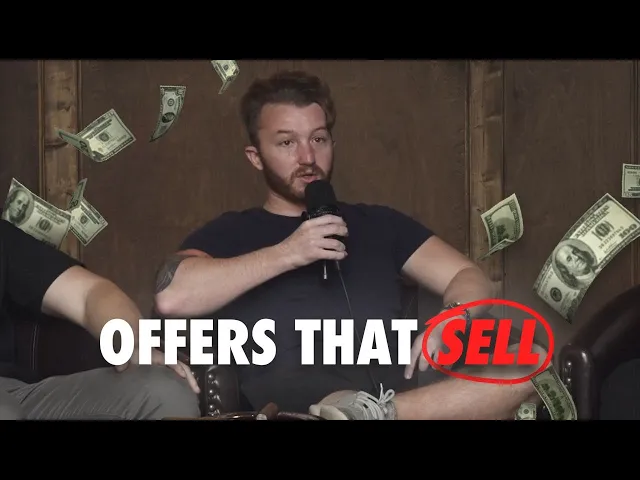
Creating Offers That Sell: How to Sell Asymmetric Opportunities and Get More B2B Clients
The Core Principle Behind Every Sale
Every sale comes down to one thing: a claim.
You're essentially saying — give me this, and I'll give you back something worth more than what you gave me. That's it. That's the whole game.
This is what I call selling an asymmetric opportunity. You're not just exchanging value evenly. You're promising — and delivering — a return that far exceeds what the client put in.
It sounds simple. Most people mess it up anyway.
What an Asymmetric Offer Actually Looks Like
Here's how it works in practice:
I'm really good at something. I'll execute it for you. In exchange for a set amount of money, my execution — combined with what you already have in your business — is going to make you way more than what you paid me.
That's literally how business works.
It's the same framework we use at Client Ascension. The claim is straightforward: you're going to make way more than what you invest. And it works. If you go to clientascension.com and look at the screenshots, the results speak for themselves.
Someone comes in with a B2B company — a marketing agency, a consultant, a freelancer, any kind of B2B service provider. We show them how to spin up outbound campaigns, write cold email scripts, get them leads, and set up the software — faster than anyone else can. And then it just works.
That's the model: you pay us, we execute, here's the evidence it works, here's how fast it works. Done.
You Have to Actually Deliver the Result
Here's where a lot of people get tripped up.
They want to sign clients, but they don't want to back their offer with any kind of guarantee. The reasoning is usually something like — what if I don't hit the numbers?
And I get it. But think about what that actually means.
Let's say you're an ad agency. A client pays you $5,000. They spend $10,000 on ads. They make $2,000 in sales. They just lost a massive amount of money. You don't deserve the $5,000 — because you were not capable of delivering an asymmetric offer. You couldn't even produce them their money back.
This is the hard truth: if your offer doesn't work, you don't have a real offer.
The discomfort around guarantees isn't a negotiation tactic problem or a sales script problem. It's a capability problem. If you're afraid to promise results, it usually means you don't fully believe you can deliver them — and that's the real thing to fix.
Your Offer Is the Barometer
The quality of your offer is the single most important variable in whether your business grows.
This is actually why we're selective about who we bring into Client Ascension. A lot of people assume sales calls are just pitch calls — that we're going to sell hard no matter what. That's not how we operate.
What we're really doing on those calls is figuring out what you're selling and whether it actually works. We ask questions, dig into your offer, and then tell you honestly — yes, this works, or no, this doesn't.
We tell people no all the time.
Sometimes we'll say: you need to change this before you come in. Here's a little consultative direction — go do this first, then come back. We're not going to hard sell you if we don't think it's going to work. I don't want you inside Client Ascension if it isn't going to produce results for you.
Because if your offer isn't asymmetric — if you can't genuinely deliver more value than what someone paid — then no amount of outbound, no cold email volume, no sales script is going to fix that.
How to Audit Your Own Offer
Before you worry about lead generation or closing rates, ask yourself these questions:
Does your client come out ahead?
If a client pays you and follows your process, do they end up with more than they started with — financially, operationally, strategically? If you can't answer yes with confidence, the offer needs work.
Can you show evidence it works?
Results, case studies, screenshots, testimonials — whatever form it takes, you need proof. The claim only lands when there's evidence behind it.
How fast can you deliver?
Speed is part of the asymmetry. The faster you can produce the result, the more valuable your offer becomes relative to the investment.
Would you put a guarantee on it?
This is the real test. If you'd hesitate to back your offer with a guarantee, that hesitation is telling you something important about whether you actually believe in what you're selling.
The Bottom Line
Selling is simple when your offer is right. You make a claim, you back it with evidence, you execute, and the client comes out ahead. That's the whole framework.
But if you're trying to close deals with an offer that doesn't actually deliver asymmetric value — you're going to keep grinding and wondering why it's not working.
Fix the offer first. Everything else gets easier after that.