
Agency Growth
How I Built Agency and Coaching Offers From E-Commerce Experience
· Updated
I'm Brook. After building my own e-commerce store and putting a team around it, I started offering help to other store owners. I had two offers: coaching for someone starting a store, and a growth-partner agency for stores that needed help with marketing and conversion.
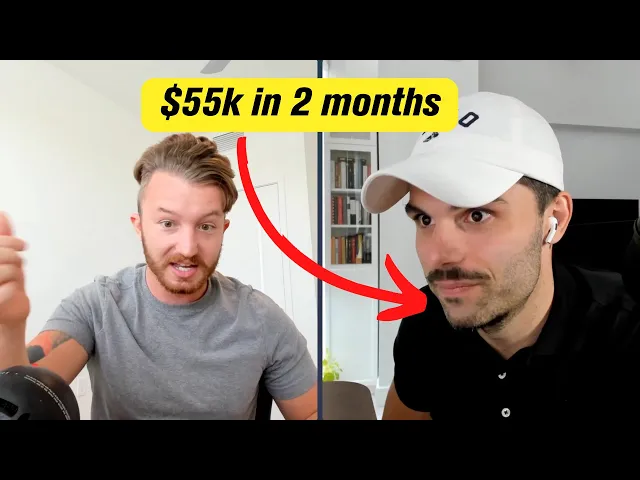
In the interview, I said the new agency and coaching business did about $30,000 in its first month and $25,000 the following month. The first month was mainly coaching; the second was mainly agency work. That combined business was separate from my earlier store, and the figures were not a profit or a stable recurring-revenue measure.
The two offers served different stages of a store owner
The agency offer was for stores smaller than my own that needed help growing. We looked at what was missing: email marketing, Google Ads, Facebook Ads or work on the website. It was a flexible approach based on the store's needs, rather than one identical service for every client.
The coaching was for someone who did not yet have a store and wanted to learn how to build one. My idea was that a successful student might later need the agency. That was the intended progression between offers, not evidence that a measured share of students had already made that transition.
Client Ascension related reading: Collin's consulting case study describes another business with different service and coaching needs. It is a comparison of offer structure, not an outcome from my program.
Coaching and agency clients came from different channels
Most coaching clients had come through Twitter. I had started sharing what I learned from building my own store after being fairly quiet online before that. Posting gave people a way to find the coaching offer.
The agency clients had come from cold email, a channel I had not understood before joining Client Ascension. The distinction mattered: I was not claiming the same source produced every type of customer in the new business.
For content, Connor and I would send each other questions, get on a call and answer them rapidly. We could use the conversation to extract shorter content without pretending it was a formal podcast.
Client Ascension related reading: the acquisition guide connects audience, channel and sales process. It gives context for why different offers can need different routes to a client.
The performance offer depended on work the client controlled
We were trying to work out a performance-based agency price. The idea was to establish where the store would be without us and take 25% of the increase we produced. At the interview, we were still trying to get that pricing right.
A practical problem appeared when a client delayed access to ad accounts and creative. I could not improve the numbers that determined my pay if I did not have what I needed to do the work. We had laid out a weekly proposal, but the handoff had not happened as expected.
I was considering different contract terms or a more retainer-based approach. The ideas discussed in the interview were ways we might change the offer, not a finished set of terms I could claim had already fixed the problem.
The setup fee helped me bring in specialist work
At that point we charged a setup fee of about $3,000. I described using it to outsource work depending on what the client needed. Google Ads and some website conversion work were strengths of mine; for email I could bring in somebody with that expertise.
That did not mean I had a complete delivery team already running the agency independently. I was still tied up in fulfillment and sales. With several clients, managing the work and the specialists was becoming a constraint.
Client Ascension related reading: Nick's email agency case study describes a separate operator's move toward a shared AI system and delegated delivery. It is an operating comparison, not a description of my team.
I had to define the work before I could hand it over
One of the hardest parts for me was making clear SOPs and Loom videos for a hire. Because I was doing so much, it was easy to see a long list of things somebody could help with. It was harder to isolate the specific tasks and explain exactly how to do them.
That was the work needed around hiring, not just finding a person. Larger agency and coaching revenue targets discussed in the conversation were goals. They were not additional months of results beyond the early figures I had reported.
More outreach still required learning from the responses
My advice was to have a useful skill, communicate the offer clearly and do enough outreach to test it. I also emphasized looking at which email variant was generating responses, turning off weaker versions and trying to improve the winner. Volume alone was not the whole process.
I had also struggled with what to do once people replied. Some sales needed several conversations and different people involved; I described one close that took about five calls. Learning how to manage replies and the sales cycle was different from only sending the first message.
Client Ascension related reading: the AI Assisted Agency program page contains current offer details. This early agency account does not establish current pricing or guarantee that another owner will repeat its first months.
Adapted by Client Ascension with AI assistance from Brook's interview. The first-person narrative follows the source speaker’s account. Watch the original video





