
Case Study
How I Built a $20K-a-Month LinkedIn Agency While Starting With a Tech Job
· Updated
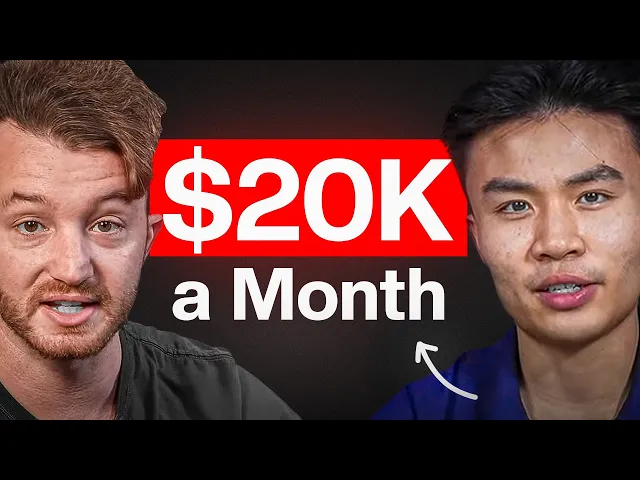
I'm Matt. I run a LinkedIn ghostwriting and lead-generation agency. In the interview, I confirmed going from zero to a reported $20,000 a month in three months inside the program. Zero was the agency starting point; I already had a well-paid tech job. The interview did not provide a revenue-versus-profit breakdown, and the host explicitly said this was not the average program result.
My service combines founder content with outbound support. The content brings attention to the founder; connection requests and message sequences help capture demand and book sales conversations. My first paying customer came about two months into building the agency.
I built the agency alongside the job
I kept working the tech job during the early stage and used mornings and evenings for the agency. I had only left the job the month before the interview. It was a lot of work to run them alongside each other.
I had no track record or case studies for this service. Working for free was a way to attempt a result, build evidence and potentially turn that experience into paid work. At the start I did not know how long that would take or whether it would work.
In the first week or two, I went through the courses and onboarding and worked on the offer. I also attended coaching calls. Having feedback and people to ask helped me make decisions rather than trying to figure out every part of the business alone.
The first offer grew out of founder content
The core service was creating LinkedIn content, typically for founders. Alongside that, we supported the outbound side through connection requests and messaging sequences. That meant helping with both visibility and the next conversation.
Those are different parts of the service. Publishing content does not by itself mean a sales call has been booked; the demand still needs to be captured and moved into a conversation.
Client Ascension related reading: the acquisition guide explains choosing a channel that fits the offer and evaluating cost per client over a full sales cycle.
I used free work to build the first evidence
I posted on LinkedIn that I wanted to help business owners grow their presence. A few people came through, and I wrote for a small group of founders for about a month or a little longer without charging them.
I used the results from that work to get the first paying customer, about two months into building the agency. When they paid, I felt impostor syndrome: now I needed to deliver. The confidence came from doing the work and seeing that I could get a result.
Fulfillment turned an early client into referrals
I concentrated on getting that paying client the best result I could. They became a strong case study for the business and referred me to other people. That experience made fulfillment a major focus for me.
I estimated that around 25–30% of my current clients had come through referrals, with the rest coming inbound through LinkedIn. That was my estimate of the client mix, not a percentage of revenue or a guaranteed result for another agency.
I became more selective about the customer
I began looking beyond whether someone was willing to pay. I wanted to work with businesses that already had clear demand, a good offer and people I liked working with. I also wanted the possibility of a long working relationship.
There was still uncertainty in running the business: choosing software, structuring a sales call and learning how to hire were decisions I had not already mastered by working in corporate. Reaching the monthly business figure did not make those decisions disappear.
Client Ascension related reading: the VSL breakdown examines how a complete sales presentation explains an offer and addresses objections.
Client Ascension related reading: Jeff Park’s case study explains landing-page services, Twitter content, referrals and a more structured sales process.
Adapted by Client Ascension with AI assistance from Matt's interview. The first-person narrative follows the source speaker’s account. Watch the original video





