Case Studies
Case Study: How Doby Made $12K in His First Month with an AI Automation Agency
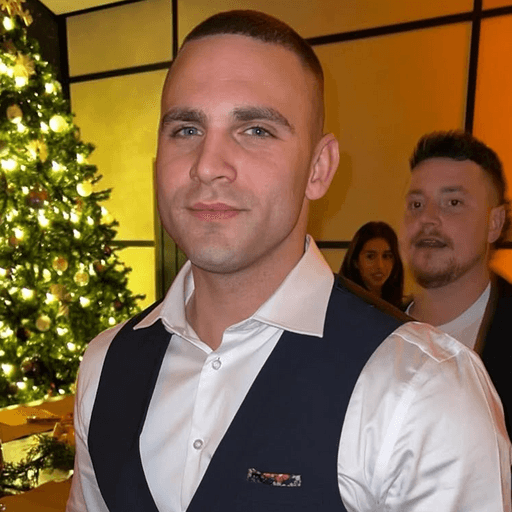
I recently sat down with one of my students — Doby — who hit $12,000 in his very first month running an AI automation agency. I want to break down exactly how he got there, what he sells, and what actually made the difference.
But first, a quick disclaimer: this is not a typical result. The US Bureau of Labor Statistics says 20% of businesses fail in their first year and 65% fail within ten years. Statistically, you're more likely to fail than succeed. My job is to give you the information that shifts those odds — not to promise you a payday.
Fresh Out of College with No Job Offers
Doby graduated about a year before we spoke. He had a computer science degree and fully expected to land a six-figure tech job. He applied everywhere. Nothing came through.
Instead of spiraling, he tried dropshipping, trading, content creation, streaming. None of it stuck. Then he stumbled onto AI automation on YouTube and something clicked. He liked building things with real-world, practical use — not abstract enterprise code that disappears into a void.
He started freelancing on Upwork, building automations for coaches and consultants at $500–$1,000/month. After five months, he had some traction but no real growth engine. The bottleneck wasn't skill — it was system.
What Changed When He Got Structured
Doby didn't have a proper offer, a defined ICP, or a process for consistently signing clients. That's when he joined Client Ascension.
His logic was simple: college cost far more than the program, and if my free YouTube content was already that valuable, the premium version was worth the price. He bought on the sales call.
Once inside, he grinded the course material — 14 hours a day for the first few days. His words: "After watching all the videos, I already got my money's worth."
Within two weeks of running the Marquee Method outreach strategy we teach, he signed his first client. Then he restructured his offer using deliverable stacking — going from $3K/month to $7K/month for the same client. Learning to present ROI clearly and justify pricing changed everything.
What He Actually Sells
Doby runs an AI automation agency. In plain terms, he builds backend systems that eliminate manual, repetitive work inside a business.
Think about everything a business does by hand — dragging leads between tools, copy-pasting data, manually setting up onboarding sequences for every new client. That can eat 10–20 hours a week. Doby automates all of it.
The result: founders get their time back, reduce reliance on virtual assistants, and get systems that don't make human errors. Once built, they work indefinitely.
His main tools are no-code: Make.com, Zapier, and n8n — whatever the client already uses. For CRM, he works with Close.io and HubSpot. Everything connects: Slack, Google Sheets, Google Chat, whatever the business runs on.
How Hard Is It to Learn?
This question comes up constantly, and Doby answered it well: you can get from 0% to 80% proficiency in about three days of focused YouTube learning. Getting to 99% takes months — but you don't need 99% to run this business. Most clients aren't asking for complex AI pipelines. They just want to stop manually creating onboarding docs, stop dragging leads between tools, stop wasting hours on tasks a system can handle in seconds.
The Seed, Soil, and Sunlight Framework
Here's the analogy I keep coming back to: your offer is the seed, your sales presentation is the soil, and your outreach is the water and sunlight.
If you have a proven offer, know how to present it with deliverable stacking, and you're consistently doing outreach — the plant grows. It's math, not magic.
The reason people fail isn't that the model is broken. It's that they're not executing one of those three things correctly. Two people can have the exact same resources and instructions and get completely different results — because one of them isn't actually doing the work.
What Changed Beyond the Money
When I asked Doby what changed beyond the income, he didn't lead with the number. He said he was struggling to find purpose before this. Now when someone asks what he does, he says: "I'm an entrepreneur. I run a small business and I make good money online." That confidence didn't come from hitting $12K — it came from the work it took to get there.
The Advice He'd Give His Past Self
If you're dabbling with different business models and haven't committed to anything yet — pick a mountain and climb it.
You can research from the base all you want, but you won't get clarity until you commit and move. And when you reach the top, even if it's not where you expected to land, you can finally see across the horizon to every other mountain you couldn't see from the bottom.
There's no halfway. You have to commit to the climb.