
Business Growth
How I Design a Front-End Offer to Pay Back Acquisition Costs
· Updated
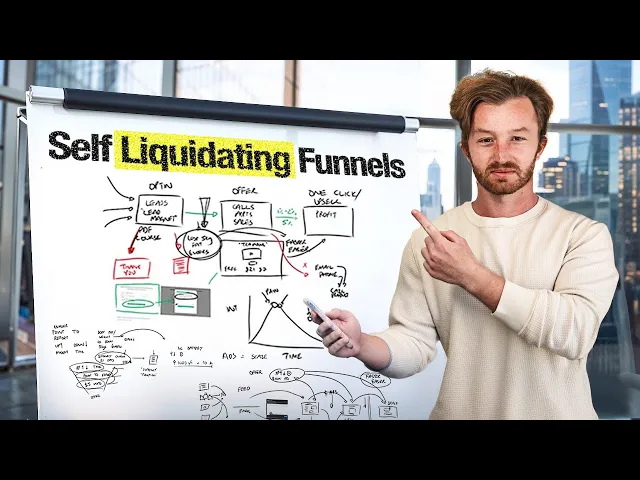
I use self-liquidation to mean collecting enough from a customer's initial purchase to cover what I spent acquiring them. The aim is to reduce the cash tied up in bringing new customers in, then earn more through continued service and relevant additional offers.
That starts with two separate questions: does the first payment cover acquisition, and does the customer relationship produce enough value over time? Recovering the marketing spend is not the same as having paid every cost of delivering the service.
Put the payback period beside lifetime value
If I spend $2,000 to acquire someone who pays $1,000 a month, the first payment has not recovered the acquisition spend. In the simplified example, the second payment gets the revenue collected up to that acquisition amount. Delivery costs still have to be accounted for separately.
I described an average initial order of around $2,500 against an acquisition cost of roughly $2,000 to $2,500 in our business. Those were source-period estimates, not targets every funnel should achieve. I also look at retention and what customers pay in later months, rather than stopping at the initial sale.
Give cold traffic a clear first purchase
I want a front-end offer that people already buy, with a concrete result and a price suited to my level of authority. The examples I used included setting up a cold email system, building a webinar funnel or setting up an ads account. A stranger needs to understand the initial job before considering a broader relationship.
There is a tradeoff between a one-time setup followed by a later retainer, and a setup fee with a subscription from the beginning. Calling something a one-time payment can simplify the first decision, but a separate upsell requires another sales step. The front-end offer is the entry point, not necessarily everything the business sells.
Client Ascension related reading: the take-home income lesson distinguishes business revenue from owner income.
Price the work as well as the acquisition
I used an example with a $3,000 setup payment, $2,000 acquisition cost and $500 of setup fulfillment, with sales commissions also needing to be paid. That is a fuller picture than comparing the payment only with ad spend. The setup has a job to do before the recurring relationship begins.
For recurring revenue, I average across the customers who leave early as well as those who stay. I would include upsells, downsells and cross-sells in the customer-value picture rather than build the plan only around the best client on the roster.
Match the channel to the resources you have
I group acquisition into outreach, advertising and content. Outreach takes labor, and content also takes work to produce, so neither is literally cost-free just because no advertising invoice arrives. Scaling that work can mean paying somebody else to do it.
I recommend focusing on one front-end offer and one channel while the system is being built. I used the example of spending $2,500 on a test when the modeled cost to acquire a customer was $6,000: the test had not yet reached that modeled acquisition cost. That was an illustration of the cash needed to test an offer, not a universal acquisition price.
Qualify before the calendar
In the paid call funnel I described, an application checks revenue, budget and ability to pay before a calendar is shown. I also discussed revealing the price for a B2B offer so somebody can decide whether it is in range before using the sales team's time.
I watch what changes to price, guarantees and qualification do to acquisition cost and lifetime value. A higher price is not automatically an improvement if the close-rate change breaks the acquisition economics. Those are variables to test together.
Build continuation after the first offer works
The later opportunity is a relevant continuation, upsell, cross-sell or different service for an existing customer. I described a portfolio in which people might stay, move to another offer or return after leaving. That requires something useful to buy; a first purchase does not guarantee a second one.
I would systematize the first revenue stream and its fulfillment before adding the next. Clear scope, delivery systems and a team matter because collecting money up front still leaves work to do. The strategy is about the timing and structure of the business, not acquiring customers with no costs or obligations.
Client Ascension related reading: the client acquisition guide discusses matching the offer, channel and sales process.
Adapted by Client Ascension with AI assistance from Daniel Fazio's lesson. The first-person narrative follows the source speaker’s account. Watch the original video





