
Agency Operations
B2B lead generation
Sales
How to Get High-Ticket Clients: Check Fit, Offers and Proof
· Updated
We recommend selling a better-defined engagement before trying to sell a bigger price. For a substantial service, the buyer needs to understand the problem being addressed, the work involved and why your agency is equipped to do it. Your qualification process should uncover that fit rather than sort people into “good” and “bad” clients by budget.
The useful change is to connect positioning, acquisition and sales around the same buyer situation. A website that promises strategic support, an outreach message offering cheap execution and a proposal for an open-ended retainer describe different businesses. We would fix that mismatch before adding a premium tier.
Choose the buyer situation you can serve well
We start with a short account of the work: who needs it, what is happening now, what the engagement changes and what the buyer must provide. For an illustrative creative service, a brand already running advertising might need a dependable process for commissioning and approving static-ad variations. That is more concrete than “premium marketing for ambitious businesses.”
Build a research list around that situation. Look for evidence relevant to the service, such as active campaigns or an existing creative workflow, then ask about the internal process. Company size can help organize research, but the actual need and decision still require a conversation.
A useful qualification record has reasons on both sides. The buyer may have suitable work but lack access to the source assets, need a different specialist or be unable to review the output. Those are operating facts to investigate, not objections to overpower.
Review the questions before building the booking form
We would use a short form to establish the service needed, the current arrangement and who will participate in the decision. Save detailed or sensitive questions for the point where they help assess an actual project. A useful form starts a conversation; it does not need to extract the whole business plan.
In discovery, check the problem, timing, approval process and available resources. Ask what the buyer wants to stop doing themselves, what has already been tried and what would make the engagement unsuitable. This can reveal whether the proposed package solves the problem or merely sounds impressive.
Keep a clear next step for each decision. A fit can move to a scoped proposal; an unresolved access question can return to the responsible person; a mismatch can close respectfully. We recommend recording the reason instead of keeping every inquiry in an indefinite nurture sequence.
Choose evidence that answers the expensive question
The bigger buying question is often “Can this provider handle the work and coordination?” A useful answer shows the workflow as well as the finished asset: the brief, checks, approvals, revision boundaries and handoff. A portfolio with attractive images may leave those responsibilities unexplained.
Read Corey’s design-retainer account for the Trello request queue and the move from broad design toward static ads. Those sections give a useful comparison for a creative proposal: explain how requests enter the queue, how work is prioritized and which kinds of request the package covers. Use that process question without adopting his historical terms or results.
If your own evidence is sample work, say so and show the decision-making. For the illustrative creative service, explain the brief, the variations prepared and how text or product details were checked. Review whether the sample demonstrates the competence the buyer actually needs rather than presenting it as a commercial success.
Review content and outreach against the same offer
A useful content piece can answer a question from discovery: what a good brief includes, how revisions are handled or how a brand can prepare its source assets. The reader should finish with something they can use even if they do not hire you. That teaching also makes the paid work easier to understand.
Choose distribution where the intended buyer can encounter that explanation, whether through appropriate introductions, relevant content or evaluated direct contact. An expensive service does not automatically require an exclusive event, and visibility alone does not establish a suitable opportunity.
For outbound, the cold email strategy guide can help connect buyer criteria, message and next step. Write about the actual situation and proposed conversation rather than a guessed internal crisis. Review whether contact remains appropriate before using an automated follow-up.
Check the proposal from scope through to delivery
We recommend writing the proposal so the buyer can see the work, dependencies and decisions. For the creative example, name the asset types, source material, review owner, revision boundaries and delivery handoff. State which requests need a new brief instead of leaving “premium service” to carry the meaning.
The business-offer guide can help work through price and terms after the scope is clear. Discuss the fee alongside the work and resources required. An invented return multiple does not justify the amount, and a larger outcome headline does not answer how the project will run.
Choose tiers only where they represent useful differences in work. A production-only package and a package that includes coordination can be compared through responsibilities. Avoid artificial scarcity or a deliberately unsuitable top tier whose only purpose is to steer the buyer to another price.
Review the engagement before proposing more work
A useful onboarding handoff records who supplies inputs, who approves output and how an issue is raised. Support availability belongs in the agreement; it should not expand automatically because the fee is higher.
We would review completed work and the buyer’s next need before suggesting renewal or another service. Sometimes the right answer is a narrower project, a later start or no further work. The aim is a well-served buyer, not a premium label attached to every relationship.
Review historical promotion separately from current terms
The original article included an offer promotion. The retained image is historical promotional material, not a statement of the current refund terms or evidence of results a reader can expect. Check the current program’s applicable terms separately.
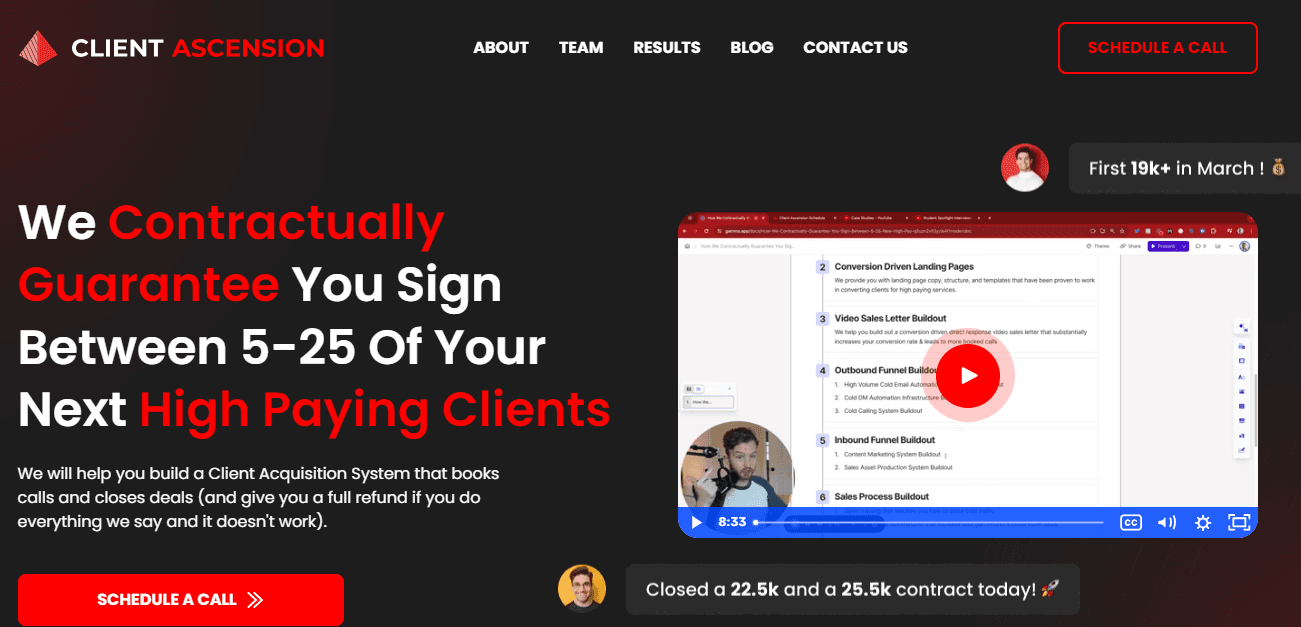
Client Ascension’s current AI Assisted Agency page describes a training and coaching program and lists templates and live coaching. Those are stated program inclusions, not evidence of the customer count or personal income a reader will achieve.
Prepared by Client Ascension with AI assistance. Documentation checked 2026-10-29.





