
Agency Growth
How Our TikTok Agency Reached a $29.5K Month With Clearer Roles and Clients
· Updated
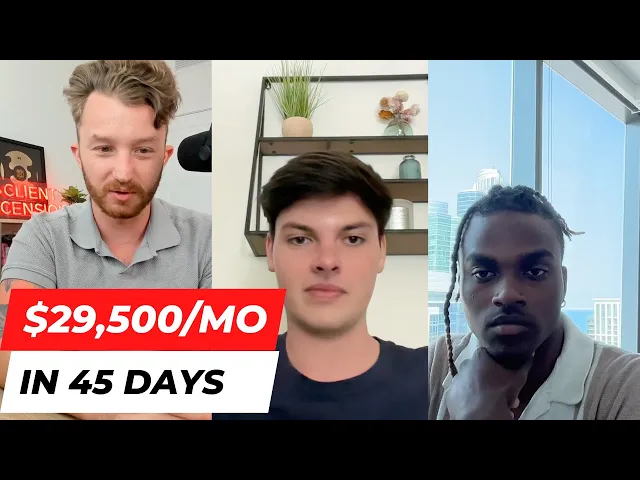
I'm Eddie. Brady and I run an agency using TikTok ads. I handle sales, Brady focuses on product, and we both work on marketing. We described going from around $5,000–$7,000 a month to a $29,500 month roughly a month and a half after joining Client Ascension.
That was our agency’s monthly result, not either founder’s personal income or a disclosed profit figure. We already had leads, but needed a better sales process, clearer responsibilities and clients whose businesses we understood.
More calls were not the whole answer
My TikTok had brought in leads and calls, but not every prospect was qualified. Improving sales meant changing whom we would take a call with as well as what happened during it.
David helped me with sales through one-on-one work, and I used the sales material in the program. We had not done much business-to-business selling before, so learning a process mattered alongside getting more attention.
Brady and I needed different responsibilities
Earlier, we were both working on sales. The clearer split was for me to concentrate on sales and for Brady to concentrate on the product, with marketing shared between us.
The point was to keep the work clear: sales and product had owners, while marketing was something we could still build together.
We changed the customers before simply asking for more money
We had run an information product before moving into agency work. We initially worked with e-commerce clients, then switched toward coaches and information-product creators—a market we already understood from being in it ourselves.
That helped us frame the offer and the marketing. After working on the positioning and price, we closed two retainers at our highest contract size. The interview did not state the exact price of those two agreements, so the host’s broader price examples are not their contract values.
Client Ascension related reading: the acquisition guide explains choosing a channel that fits the offer and judging cost per client over a full sales cycle.
The outreach had content and proof behind it
We added sales assets, worked on the profile and used more engagement alongside cold Twitter messages. We also had a virtual assistant helping with the outreach. The messages were part of a wider presentation of the business, rather than the only thing a prospect could see.
The useful connection was between whom we wanted to reach and what they would find when they looked at us. The offer had to fit what those customers valued, and the profile and evidence had to support it.
Client Ascension related reading: the VSL breakdown examines how a presentation can explain an offer and address objections before a sales conversation.
A new product was work underway
We were also working on an information product based on what we had learned from serving clients. That was another part of the business we were building, not an additional revenue result established in the interview.
The lesson from this stage was to get the market, offer, sales process and division of work aligned. It was not simply a matter of collecting more calls or expecting an audience to buy automatically.
Adapted by Client Ascension with AI assistance from Eddie's interview. The first-person narrative follows the source speaker’s account. Watch the original video





