
Marketing & Growth
How I Compare Outreach, Content and Ads for an Agency Offer
· Updated
Traffic takes resources even when there is no advertising bill. It can cost time, capital or both. When I compare acquisition options, I want the channel to fit the business and the resources available rather than choose it only because another company uses it. This is the framework I used in the recorded lesson to connect traffic with leads, calls and clients.
Compare the type of commitment each channel requires
I group the main activities in this lesson into cold outreach, content and ads. Outreach consumes working time, content requires sustained production and ads require capital that can be committed before the full sales cycle finishes.
I also distinguish continuing activity from an audience and library that can keep attracting attention. My comparison is a planning framework, not a promise that every post compounds or that a given amount of spend produces a fixed number of sales.
Match acquisition to the way the offer is bought
For an agency starting with limited cash, I favor outreach that lets the provider offer useful work directly. For coaching or consulting, I put more emphasis on content that establishes the credibility needed to sell guidance.
As an agency gains evidence, experience and capital, I describe adding content and ads. I would use the actual situation to make that decision; the revenue stages in the lesson are heuristics, not universal thresholds that make a channel automatically viable.
Use a service sample to demonstrate useful work
The service-based lead magnet is a deliverable prepared for a potential client. For an email agency, that could be an email or flow made for the business rather than a general resource written by an unfamiliar provider.
The purpose is to let the prospect assess the work, then discuss buying more where it fits. The sample has a labor cost, and a sale may come later, so the financial model needs to include both the work and the conversion delay.
Client Ascension related reading: the first-client acquisition guide develops a separate LinkedIn sample-service example and its follow-up stages.
Establish demand before paying to automate volume
I distinguish manual sample outreach from the infrastructure needed for high-volume automated outreach. The latter adds costs and complexity before the agency knows whether its audience wants the offer.
I want evidence of product-market fit before making that commitment. In the lesson, I explicitly warn that the modeled results can disappear and the business can get no customers if it assumes demand that is not actually there.
That is why I treat response, booked-call and customer-value numbers in the sheets as assumptions to examine, not universal provider benchmarks.
Make content explain the business case
For content, I emphasize helping the viewer understand what is being done and why it matters. In this lesson, I distinguish that from giving away every implementation step as a software tutorial.
The objective is to explain the concepts behind the service to the buyer. I distinguish that explanation of what and why from the implementation someone buys.
Qualify the prospect before the sales appointment
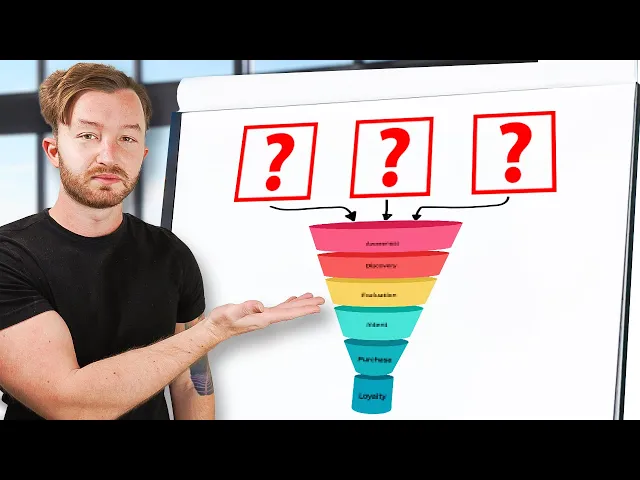
The advertising funnel I show moves from a direct offer to an opt-in, a video sales letter, an application and then booking for the people who qualify. The application routes unsuitable prospects away from the sales calendar.
I also describe follow-up for people who entered the funnel but did not book. The stages work together: generating an opt-in is not the same as producing a suitable sales conversation.
Client Ascension related reading: the guide to qualifying agency clients examines buyer fit and the evidence that supports a service relationship.
Use the model without mistaking it for a forecast
The sheets connect channel activity, sales conversion, delivery margin and customer retention. Changing one assumption changes the later cash-flow picture, which is why the model is useful for examining a plan.
I would not publish the projected monthly results as if they were already collected. The channel decision still depends on whether the offer sells, whether the agency can serve the clients and whether the time or capital commitment is workable.
Adapted by Client Ascension with AI assistance from Daniel Fazio's lesson. The first-person narrative follows the source speaker’s account. Watch the original video





