
Business & Sales
How I Make a Done-for-You Service More Valuable to the Buyer
· Updated
A buyer wants an end result, but work has to happen before that result exists. When I examine a done-for-you offer, I ask which parts of that work the provider actually takes over and which parts are still left to the client. I call those demands logistical intensity, and making them visible can change how the service is explained.
Distinguish service, coaching and self-directed work
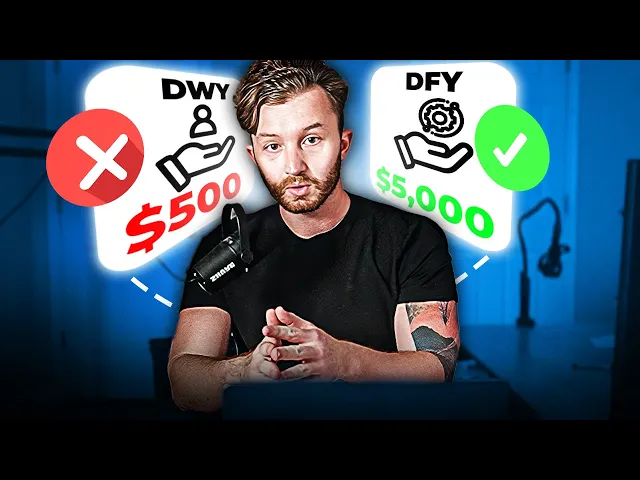
I describe done-for-you, done-with-you and do-it-yourself as different arrangements for reaching a desired result. As the offer moves toward a course or self-directed product, more of the execution remains with the buyer.
With a service, taking responsibility for the work is part of the sales argument itself. The buyer is not only buying information; they are considering what they will no longer have to execute personally.
Match the offer to the credibility available
The lesson begins with a provider trying to sell lead-generation coaching to cold prospects. My concern is that advising another business requires credibility the buyer can recognize, while doing useful work for it can be a different proposition.
That is why I favor starting with a done-for-you service when the provider does not yet have the authority to sell instruction. It is my recommendation about that starting situation, rather than a rule that nobody can ever buy a course from a new provider.
Client Ascension related reading: the guide to signing clients without results discusses a separate starting point for building relevant proof.
Map every task between the buyer and the output
For advertising creative, the output I want is a set of ads I can use. The work behind that includes writing, filming and editing. If I still have to write and appear in every ad, paying somebody only to edit does not remove the other tasks.
I use my own purchase of a more complete creative service to explain the distinction. I paid more when the provider took on more of the work needed to produce the output.
Explain the workload before presenting the service
In a sales video, I would walk through the work required for the desired end state before presenting the offer. The prospect can then understand which responsibilities the agency is taking over.
I see two problems when this is missing: the provider may not explain the work clearly, or the provider may not actually perform enough of it. A stronger explanation cannot substitute for a delivery scope that still leaves the difficult parts with the client.
Make the delivery chain concrete
For an e-commerce advertising service, I describe finding creators, handling communication and product shipping, scripting the ads, getting them edited and launching the resulting creative. That is a broader operating role than only changing settings in an ads manager.
The example also includes a performance-based arrangement. It illustrates the sort of service I am describing; it does not establish current contract terms or guarantee that every client can be served profitably that way.
Client Ascension related reading: Areeb's content agency case study is a separate account of an agency's offer and delivery operation.
Sell the responsibility you can genuinely deliver
The practical question is what the buyer must still do after hiring the agency. If the offer is meant to remove execution work, the scope needs to show how that happens rather than leave the client with another set of instructions.
I want the sales argument and the actual service to match. Mapping the tasks makes it easier to explain the difference between advice, a narrow production task and a more complete done-for-you engagement.
Adapted by Client Ascension with AI assistance from Daniel Fazio's lesson. The first-person narrative follows the source speaker’s account. Watch the original video





