
How I Made My Video Agency More Consistent and Hit a $25K Month
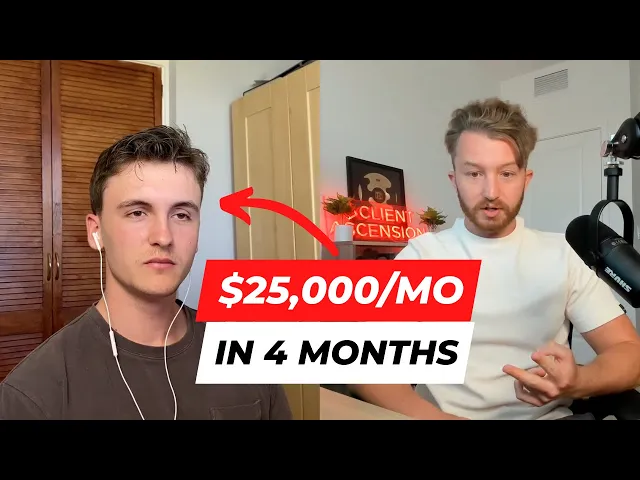
I'm Stephen. I sell video assets, and at the interview I reported $25,000 in revenue for the previous month. I had joined Client Ascension in December and described the earlier video-editing business as sporadic deals rather than a consistent pipeline.
The biggest change I described was consistency: a steadier flow of meetings, more structured fulfillment and visible examples of work I had actually produced. The monthly revenue was self-reported, with no profit or MRR figure disclosed.
A sporadic pipeline made each call feel too important
When lead generation is inconsistent, it can put pressure on the few calls you have. I described that as a domino effect in sales. The change I wanted was a system that could keep producing meetings rather than relying on luck.
I had a tendency to try cold email, Twitter messages or LinkedIn and give up quickly when the first results were poor. Having more experienced people help with the scripts made it easier for me to keep working on the process instead of abandoning it immediately.
I distinguished a record week from the regular pipeline
My highest week was about thirty-two calls. I said that was a high week, while the regular range was roughly twelve to twenty a week. About eighty percent came from cold email and the rest from Twitter.
Those were booked-call figures from my account, not signed clients or a measured close rate. Christian helped me write the first scripts and then helped with more targeted campaigns as I developed them.
Client Ascension related reading: the acquisition guide explains how channel activity fits into the wider sales process.
An event gave me a more relevant reason to reach out
Someone in a similar niche was going to an event, and that gave me the idea to reach out to people attending it with a campaign built around that context. I said the personalized campaign worked well and that I was using the approach for other events too.
The useful part was having something relevant to say about what was happening in the prospect’s world. I did not provide the campaign’s reply rate, signed-client count or revenue, so I cannot turn that example into a numerical performance benchmark.
I had to make fulfillment a real part of the business
Before, I put so much effort into signing clients that fulfillment was too ad hoc. After a sale, I wanted to chase the next one. I worked on the back end so I could deliver properly and come away with examples of the work.
The interview did not spell out a team size or detailed delivery workflow. The change I described was moving from that informal approach toward an actual structure and better client work.
Prospects could look at work we had actually made
With video, I could name a company we had worked with and the prospect could visit that company’s social page to see the asset. That made the work tangible without needing to turn every example into a claim about the client’s financial result.
I also tested including more recognizable client names in outreach and said I got better responses. That was my observation, not a controlled test or proof that adding another name always improves results.
Client Ascension related reading: the first-client lesson offers a different perspective on selling before you have a larger body of case studies. My interview describes what changed once I had work to show.
Adapted by Client Ascension with AI assistance from Stephen's interview. The first-person narrative follows the source speaker’s account. Watch the original video





