Case Study
Case Study: How Samu Built a $94K/Month YouTube Content Agency From Scratch
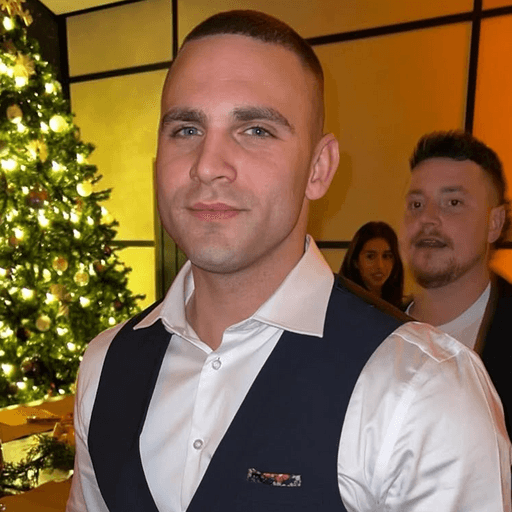
I recently sat down with one of my students, Samu, who just crossed $94,000 in a single month running a YouTube content agency. He started as a freelance video editor scraping together a few hundred dollars per project. Now he's got 30+ clients, a team of 20 editors, and an ops manager — all while working from a villa in Bali.
Here's exactly how he did it.
What He Actually Sells
Samu runs a full-service YouTube content agency, but he only works with B2B companies — SaaS businesses, service companies, and agencies.
His clients sit down and record. His team handles everything else:
Content strategy and video ideation
Full script writing
Video editing and thumbnail creation
SEO and channel management
Repurposing into LinkedIn posts, short-form clips, and email newsletters
Retainers run between $3,000 and $6,000 per month, depending on deliverable volume.
That's a far cry from the couple hundred dollars per project he was charging as a freelancer — often for more work than he does now.
The Two Things That Let You Charge $6K Instead of $600
When I asked Samu what the real difference is between a low-ticket offer and one that commands $6K a month, he nailed it:
1. Who you're selling to.
If you're selling to people who can't afford you, don't need you, or can't extract real value from your service, it doesn't matter how good your offer is. Samu struggled early because he hadn't found the right pocket of the market. Once he locked in on B2B companies, the value proposition became a no-brainer for qualified buyers.
2. Deliverable stacking.
This is something I teach heavily inside Client Ascension. Most service providers undersell themselves not because they lack results, but because they describe their offer too vaguely. "We make YouTube videos for you" is weak. But when you list out: ideation, scripting, editing, posting, transcriptions, promo emails, short-form clips distributed across LinkedIn, YouTube Shorts, and Instagram, full email sequences from video content — suddenly you have a dense, high-ticket offer. And the additional work is minimal. You're just finally describing what you actually do.
How He Got His First Clients
Samu started with mass cold email. It worked well enough to get things moving, but he hit a ceiling fast.
The real jump came when he switched to Marquee Method outreach — a targeted strategy where you go after a specific list of ideal clients with personalized, high-value outreach. For Samu, that meant writing free sample scripts and sending them to the right B2B business owners.
That move took him from roughly $4–5K per month to around $15K per month. His first real case studies came from those clients. His positioning sharpened. His confidence in charging more followed.
The Whale Client That Changed Everything
Samu climbed to about $18K/month through Marquee Method and referrals. Then one referral changed the entire trajectory.
A long-term client — someone he'd originally signed through Marquee Method over a year prior — referred him to a major LinkedIn influencer who builds in public. This person had a massive LinkedIn audience but almost no YouTube presence.
Samu's team started growing this client's YouTube channel fast, while the client was simultaneously posting publicly on LinkedIn about the entire process — tagging Samu, documenting results in real time.
The inbound leads that followed were unlike anything he'd seen before. Trust was already high. His name was everywhere. Within a few months, he went from $18K to $94K.
The lesson here isn't "get lucky with a big client." It's that Marquee Method outreach to bigger players is a legitimate strategy. Big clients know people. They refer you. That's just how it works when you do good work and stay consistent.
How He Runs the Business at $90K+/Month
At this scale, the fulfillment operation matters. Here's how Samu structures it:
Ops manager handles day-to-day client communication and project tracking
15–20+ video editors managed through Airtable workflows
Slack for team and client communication
AI plays a major role in the scripting process — not one-click output, but iterative back-and-forth that makes handling 30+ clients' scripts actually feasible
He's also building out AI agents (using tools like Claude) to automate ops tasks even further
He's currently hiring a dedicated script writer to free up his own time, which is the last major bottleneck in the operation.
What He'd Tell Someone Just Starting Out
Two things, and I think he got it exactly right:
Don't stop. There were plenty of moments where quitting would've been easy. None of the rest matters if you quit. Given enough time and the right inputs, most people figure it out.
Do great work for the right people. The referral that launched him from $18K to $94K traced directly back to consistent, quality work for a single client over more than a year. That's the compounding effect of doing good work in a niche. It doesn't feel like much in the moment. Then suddenly it does.
Samu started this in high school. He's now working remotely from Bali, managing a real agency with real systems, making real money. The path isn't complicated — it's just doing the right things long enough for them to compound.