
Business Growth
How I Built a B2B YouTube Agency From Freelance Editing and Client Referrals
· Updated
I began as a freelance video editor, taking different kinds of projects for a few hundred dollars. Over time I edited more YouTube work, learned the format and began packaging the service as an agency. At first, I was still doing the work myself despite using the agency label.
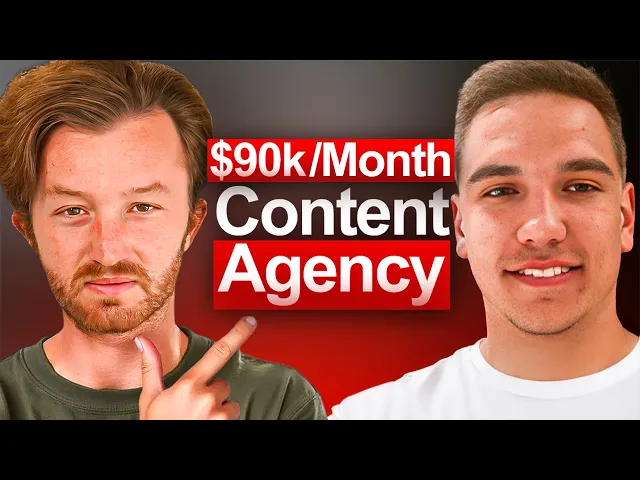
By this interview, my agency had recorded $94,000 in January. That was a single month’s business revenue, not my personal income or a profit figure. The offer, the people buying it and the way we delivered had all changed from the freelance setup.
The offer became a complete B2B YouTube service
We worked with B2B companies, mainly agencies and SaaS businesses. The work began with research and content strategy, then scripting based on the client’s niche and existing content. The client recorded; we handled editing, thumbnails, SEO, uploading and channel management.
Depending on the package, we also repurposed the videos into LinkedIn posts, short videos and emails. The point was to help the client use the material across the sales process instead of leaving each YouTube video on its own.
Our retainers ranged from $3,000 to $6,000 a month, with the quantity of videos and repurposed material affecting the package. We had not expanded into building the client’s funnels; most clients already had that side handled.
Free scripts opened relationships before the larger referrals
Cold email brought some early clients, then I plateaued. I began using researched outreach with a free script or video offer. I had learned that approach before joining Client Ascension, and it suited the YouTube service well.
That helped me move from roughly 4K–5K a month to around 15K and develop stronger case studies. The useful part was putting work in front of the right business, not only telling someone I could edit.
Client Ascension related reading: Evan’s paid-ad agency account describes researched landing-page work, pricing and operational support.
One long-standing client introduced a larger public advocate
A client I had originally signed through a free-script offer stayed with me for more than a year, then referred someone with a large LinkedIn audience. That new client was building in public and posted about our work together from the start.
We were developing his YouTube presence while he shared the process on LinkedIn. I described the resulting inbound demand as unlike anything I had seen before. More client work and proof followed, and I reported moving from around 18K to 94K over the following months.
That chain took time. The referral connected back to an earlier client relationship rather than a single new outreach message producing the entire result immediately.
I changed the offer and pricing as the service developed
Inside Client Ascension, I went back and forth on the offer, adjusted the tiers and increased prices when there was momentum. Sales coaching also became useful once the increase in demand brought more calls.
The service was more comprehensive than my early editing package, and I had found buyers who could use it. I was not simply increasing the price of an unchanged freelance task.
Client Ascension related reading: Greg’s email-agency account describes hiring, client communication and human review of AI-supported copy.
The next bottleneck was still scripting and delivery oversight
An operations manager I found through a community referral handled much of the client work and project tracking. We used Airtable for the workflow and Slack for communication, alongside a large editing team.
AI played a major role in scripts, but we still paid close attention to quality and worked back and forth on them. I was looking for a new scriptwriter because doing that work for more than thirty clients still took a lot of my time.
An operations-agent project was also being built. That was work in progress, not a claim that an AI system had already taken over the manager’s role or that I had stopped helping with clients.
Adapted by Client Ascension with AI assistance from Samu's interview. The first-person narrative follows the source speaker’s account. Watch the original video





