Business & Marketing
Transfer of Logistical Intensity: How I Make an Offer Easier to Buy
· Updated
When an offer is difficult to sell, I look at the work the buyer still has to do after saying yes. A service may promise a result while leaving the most confusing or time-consuming part with the client. I call moving that work onto the provider a transfer of logistical intensity.
Find the work your offer leaves with the client
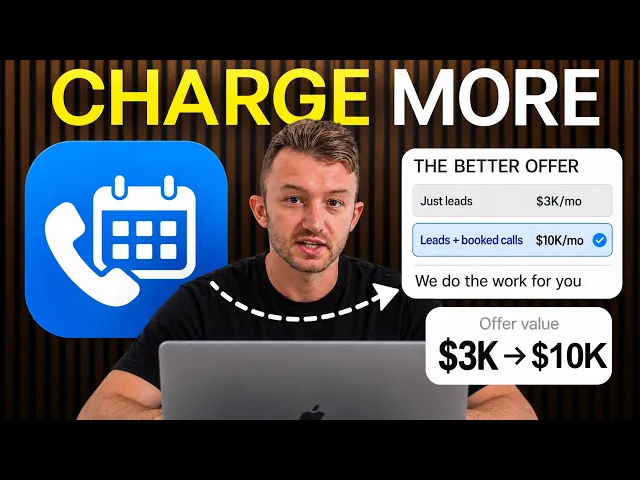
In my roofing example, both agencies create ads, landing pages and automations to generate leads. The difference is what happens next. One provider hands over the lead information; the other also calls the leads and coordinates appointments for quotes.
The second offer removes the need for the roofer to make those calls or hire someone else to do them. That is the logistical difference I want you to see, rather than assuming an additional promise or a new headline is the only way to improve an offer.
Client Ascension related reading: the asymmetric offer lesson examines the buyer's economic reasons to choose an offer.
Price the responsibility as well as the deliverable
I use hypothetical prices to show why a buyer might pay more for the same core service when the provider also takes on a difficult implementation step. The point is not just adding tasks; it is removing something the client would otherwise have to organize.
That extra work still has a delivery cost. The arithmetic in the video is an illustration of the idea, not measured net profit or proof that a provider can always raise its price by a fixed multiple.
Content production starts before the edit
For a content offer, I focus on recording: cameras, microphones, lighting and the difficulty of getting the footage made. If the client does not know how to handle that setup, selling editing alone can leave the biggest obstacle untouched.
I suggest taking responsibility for filming as part of the offer. That does not have to mean personally flying to every client: I describe finding a local production crew that can go to them instead.
I also refer to Areeb's in-person studio in Houston as an example of addressing production logistics. His business is a separate case, not proof that every provider adding filming will get the same result.
Client Ascension related reading: Areeb's content agency case study gives the fuller account behind that example.
A hybrid coaching offer includes implementation
I describe a hybrid offer as coaching with part of the work set up for the customer. In an ads-coaching example, that could include the funnel setup alongside the coaching: ad scripts and editing, video sales letter work, page design and automations.
This addresses the tension in selling information to someone who still has to implement it. A done-for-you component takes a defined piece of that implementation off their plate; it does not mean every part of the business becomes done for them.
Software can remove setup work too
ListKit originally sold lead data, which was most useful to people who already had a cold email system or knew how to build one. I describe expanding that into an offer that also handled domains, inboxes and sending, followed by more of the setup being automated in software.
The same principle applies: a buyer may need the complete workflow rather than an isolated ingredient. The lesson describes that historical evolution, not a verified current product specification or an exact revenue total from the changes.
Client Ascension related reading: the AI Assisted Agency program page contains current program information, separate from the historical challenge and promotions in this video.
Adapted by Client Ascension with AI assistance from Daniel Fazio's lesson. The first-person narrative follows the source speaker’s account. Watch the original video