
Sales & Marketing
How I Turn Deliverables Into an Offer Buyers Can Use
· Updated
A deliverable is not automatically an offer that a new buyer can use to get a result. I make that distinction with a simple example: a sheet of email contacts is useful to someone who can send cold emails, but it does not supply the rest of the system for someone who cannot.
Start with what must happen after delivery
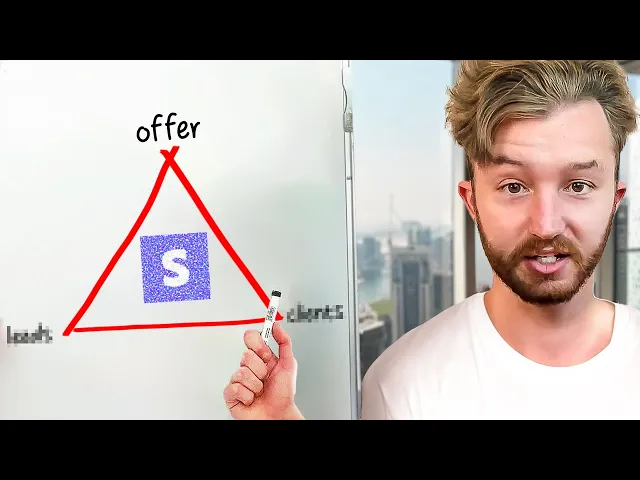
I define an offer here as a set of deliverables that lets a client pursue a tangible, quantifiable result. The useful question is not only what gets handed over, but what the buyer needs to have in place to do something with it.
For the data example, the missing piece is a way to send emails to the contacts. A done-for-you cold email service handles more of that route to a result than the list by itself. That is why the same list can be useful to an established sender and incomplete for someone starting without a system.
Client Ascension related reading: the logistical intensity lesson examines removing implementation work from the buyer.
Understand the distinction I call demand capture
I call the data-only proposition a demand-capture offer: it depends on finding someone who already needs that ingredient or has the other parts needed to use it. There is nothing inherently wrong with that kind of business; it changes who is a suitable buyer.
By contrast, I use demand generation to describe a fuller offer whose value can be explained to someone not already shopping for the individual deliverable. These are the working distinctions I use in this lesson, rather than a measured rule that every product belongs permanently in one category.
Match the channel to how the need appears
Search advertising is my example of a demand-capture mechanism. A person searching for a car-accident attorney has an existing need, and the search ad can meet them at that point. Trying to create that specific need for someone who has not had an accident is a different proposition.
I contrast that with cold email or a Meta ad that interrupts someone and introduces an offer. My point is to examine the relationship between the need, the offer and the channel, rather than treat every acquisition mechanism as interchangeable.
Client Ascension related reading: the acquisition guide covers choosing a channel that fits an offer and assessing cost per client over a sales cycle.
If you sell the ingredient, qualify the audience
Suppose I still want to sell data through cold email. My practical suggestion is to make sure the prospect list contains businesses that already send cold emails, so the audience has a reason to need the data in the first place.
I also describe simply increasing volume until you happen to find an interested buyer, but call it inefficient. That distinction is useful: reaching more people is different from selecting people who already have the conditions needed to use the deliverable.
Expand the offer when the missing work is the obstacle
The other route I suggest is to change the scope. Instead of only selling a sheet of data, help the buyer actually do the cold emailing. That addresses the gap between owning contacts and having a working use for them.
In my terminology, this moves the proposition toward demand generation by making it more complete. It is an offer-design choice, not a guarantee that adding services always improves profit or makes a product easy to sell.
Client Ascension related reading: the asymmetric offer lesson explores how an offer connects to the buyer's business economics.
Adapted by Client Ascension with AI assistance from Daniel Fazio's lesson. The first-person narrative follows the source speaker’s account. Watch the original video





