
Business Growth
My Agency Growth Playbook: Offers, Acquisition, Delivery and Evidence
· Updated
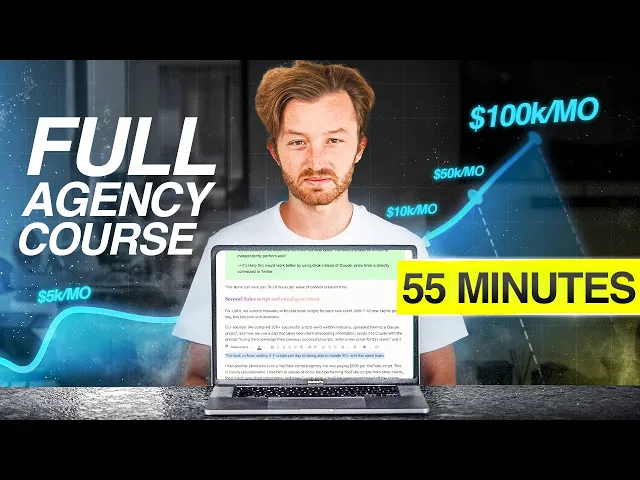
My agency growth playbook starts with the offer, not with adding every marketing channel at once. I need a clear reason for a stranger to buy, evidence that the work can be delivered and a system that can handle the clients acquired. Content, ads, AI and hiring become useful when they support those foundations.
Distinguish the front-end offer from useful back-end work
I describe an operator offering measurement implementation who had previously worked inside a business selling webinar funnels. The data work mattered to delivery, but it was not the same thing that brought the customer into that business.
That distinction changes the offer. I want to identify what the buyer actively wants to purchase, explain a concrete result and keep the first proposition understandable. Additional services can be offered after the relationship exists rather than bundled into a confusing first pitch.
Match the price and risk to the evidence available
I connect pricing with the authority the buyer can actually see. If the business has little evidence, insisting on a premium price does not by itself make the prospect trust it. In the lesson I describe temporarily lowering a student's price while building case studies.
I treat a performance arrangement or a clearly defined guarantee as another way to address perceived risk. The useful question is what evidence and terms make the offer credible for this buyer, rather than assume that a single close-rate target proves the correct price for every agency.
Look for a new opportunity rather than claim superiority without proof
A common pitch asks me to replace something I already do successfully with work from somebody whose ability I cannot assess. The prospect may reasonably believe the existing approach is better.
I contrast that with creating a new opportunity: for example, a webinar or quiz funnel the business does not already use, or bringing a successful creator onto a platform they have not developed. The pitch can explain the new mechanism rather than depend entirely on claiming to be better than the buyer.
Start with high-touch acquisition and useful case evidence
For an early agency, I put personalized outreach, sales activity and actual case studies ahead of building a complicated marketing operation. The Dream 100 approach identifies a suitable prospect and does relevant work for that person.
I also discuss simple cold email and consistent LinkedIn activity. The emphasis is on relevant offers and personal follow-up, not on copying an example message and assuming its response rate will transfer to a different business.
Connect useful teaching with an email audience
After the offer has evidence behind it, I describe useful YouTube material aimed at questions buyers are already searching for. A relevant lead magnet can give viewers a reason to join the email list, followed by regular useful broadcasts.
Simple screen sharing can be enough to explain how a result was achieved. I do not want production complexity to prevent publishing the knowledge. The content and the follow-up should serve the same buyer and offer.
Client Ascension related reading: the organic content and email guide covers those connections as a focused system.
Treat ad spending as an acquisition model
When considering ads, I want to compare the spending required to acquire a customer with the value and costs of that relationship. A low daily budget can mean waiting a long time to collect enough observations; that is different from proving that the campaign is profitable.
I favor direct-offer VSL or application paths for cold paid traffic in this lesson, while using lead magnets with organic content. That is the approach I recommend here, rather than a universal claim that no other funnel can work.
Client Ascension related reading: the historical Meta funnel guide shows how offer pages, qualification and follow-up were connected in one of my funnels.
Use AI-assisted drafts and real sales questions
For content, I describe giving AI a client's business and intended audience, then asking for relevant ideas. I also use transcripts from calls or videos to extract lessons and adapt them into emails or social posts.
For client scripts, the system I describe combines previously successful scripts with new onboarding information to produce a first draft. The team's job becomes reviewing and adjusting that output. The examples and the client context matter; the instruction is not simply to generate generic copy.
When writing a VSL, I describe collecting transcripts of sales calls and asking for the questions and objections in descending order of frequency. Those questions provide an outline for what prospects need answered.
I use the same principle for separate sales assets. If prospects repeatedly ask how long results take or whether the agency understands their industry, organize the actual client evidence that addresses those questions instead of improvising the answer on every call.
Hire for the bottleneck in front of the business
I describe an operator repeatedly asking about acquisition while ignoring interested leads because fulfillment had become something he disliked doing. In that situation, another acquisition tactic was not the immediate answer; delivery help was.
The role structure changes as the business grows, but I want the next hire to remove a real constraint. I also discuss output-based compensation for deliverables and retention or upsell incentives for client success, as an approach to aligning responsibility with results.
Make sales, onboarding and delivery repeatable
I want enough genuine calendar availability for appropriate prospects to find a convenient appointment. For inbound leads, I describe application questions that establish whether the business fits the offer before a sales conversation.
Onboarding also needs clear scope, responsibilities and refund terms rather than leaving every engagement open to different expectations. I want defined success metrics and raw client data tracked over time, so reports and decisions have something concrete behind them.
My e-commerce email example follows strategy, copy, design and uploading. Each stage depends on the preceding work being ready. I want those steps defined and recorded so that training somebody means showing the actual process.
Financial modeling belongs alongside that delivery process. Distinguish revenue, gross profit, acquisition cost and the time over which money is collected. A large lifetime revenue estimate is not the same thing as cash available today or net profit after every expense.
Build authority with a method and evidence
I want a substantial piece of content that explains the method, addresses objections and shows why I use it, supported by data and case studies. That requires developing a method worth explaining, not only announcing that I am an expert.
Client interviews and documented results make that explanation inspectable. The way I connect authority, pricing and acquisition is an ongoing cycle of useful work, evidence and communication. It does not turn the course's revenue framing into a guaranteed result for the reader.
Adapted by Client Ascension with AI assistance from Daniel Fazio's lesson. The first-person narrative follows the source speaker’s account. Watch the original video





