
Business Growth
How I Qualify Agency Clients Before Discussing Price
· Updated
When an agency struggles to sell at its intended price, I first look at the businesses it is talking to. A prospect can like the service and still lack the resources to buy it or the business conditions for it to work. My approach is to qualify those conditions before treating every objection as evidence that the agency should charge less.
Separate client fit from delivery ability
When I was starting out, uneven client results made it difficult to tell whether the problem was my skill or the client's business. Some accounts could benefit from the work while others had underlying problems the service could not solve.
I would investigate the business before taking responsibility for every disappointing result. That means learning what it sells, whether it is generating revenue and whether the proposed work fits its situation. This is a qualification question, not a reason to stop improving fulfillment.
Place an application before an open calendar
I used to send people straight to a booking calendar from a landing page or video. That made the calendar available to people who were not commercially qualified to work with me.
The alternative I describe is an application before the calendar. Ask about the business and whether the prospect can afford the starting fee; use those answers to decide whether a sales appointment makes sense. In the historical funnel example, applicants who failed the relevant checks were not shown the booking page.
The application changes what the sales conversation is for. Instead of spending it discovering that there was never a viable purchase, I can concentrate on whether the service is an appropriate solution.
Qualify outbound before sending the message
For inbound leads, an application can do some of the filtering. For outbound, I want the target list to reflect the kind of company that could buy before a message is sent.
I give company size as a possible prospecting filter in the lesson. It is a way to narrow a list, not proof that every company above a headcount threshold can afford a particular service. The commercial question remains whether this specific business has the resources and need.
Client Ascension related reading: the outreach profile and website guide covers what an interested prospect may inspect after receiving a message.
Teach something the intended buyer can use
Attracting a better-fit client requires doing something that makes the business visible. I emphasize publishing useful material: information a potential buyer can apply in the area where I want to demonstrate expertise.
If everything I publish is aimed at beginners, I should not be surprised when beginners make up much of the audience. I want the subjects and depth of my material to fit the people I am trying to serve, rather than rely on the word authority as if it were a substitute for useful work.
I connect consistency with building an audience. A follower count can act as social proof, but publishing something helpful once is different from repeatedly being useful over time.
Make case evidence specific enough to assess
My next emphasis is case studies that describe a concrete result. A statement that someone enjoyed working with the agency tells a buyer something different from evidence of what changed in that client's business.
I want that result presented in a format the prospect can inspect, such as a video on a professional profile or website. The aim is to show the connection between the service and the work delivered, rather than let an enthusiastic testimonial stand in for an explanation.
Client Ascension related reading: Areeb's content agency case study is a separate account of the offer and operation behind a service business.
Count qualified opportunities rather than all leads
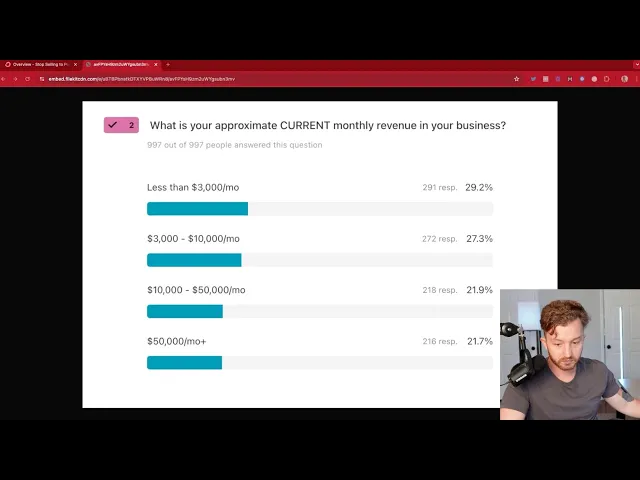
A large audience and strong case evidence do not mean everyone entering the funnel is qualified. I show a distribution from one of my funnels to make that point: filtering remains necessary even after investing in content and authority.
The number that matters for planning is the portion of leads that can genuinely become appropriate customers. If very few people fit the offer, a calendar full of unqualified conversations can hide how small the actual opportunity is.
That is why I treat marketing, follow-up and sales as ongoing operating work. Doing a good job for current clients matters, but it is not a complete system for bringing suitable new businesses into the pipeline.
Adapted by Client Ascension with AI assistance from Daniel Fazio's lesson. The first-person narrative follows the source speaker’s account. Watch the original video





