
Agency Growth
How I Separate an Agency’s Offer From the Product That Delivers It
· Updated
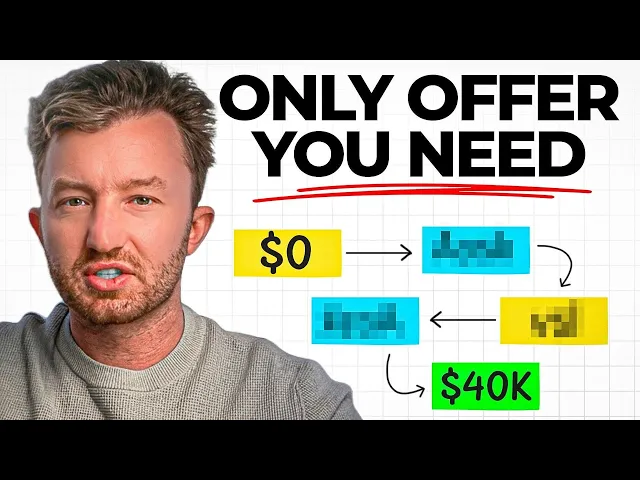
When I look at an agency offer aimed at people who do not know the provider, I start with what the buyer wants to achieve. The product may involve content, outreach, ads or an automation build, but my preferred front-end offer explains the new leads, calls or sales that the service is intended to create. That is the distinction I want to make before adding more deliverables.
Distinguish the purchase from the delivery method
I use offer to mean what the customer is buying and product to mean what they receive or how the work is done. In my approach to cold traffic, the commercial result leads the explanation; the mechanism makes it credible and deliverable.
An outreach campaign and a content service can therefore be different products aimed at a similar buyer goal. Talking about inboxes, posts or AI does not automatically explain why that goal matters to the business.
This is my framework for positioning a service to an unfamiliar buyer. It is not proof that every other category of business purchase is impossible.
Client Ascension related reading: the value proposition guide develops the distinction between a deliverable and a buyer's reason to want it.
Do not copy a warm-audience coaching funnel blindly
A person who has watched my content has a different starting point from a stranger receiving an agency's first message. They may already understand the business and trust the person selling it.
I would not assume the explanation used for a coaching program to that familiar audience is the same explanation that makes a done-for-you service compelling to a new business prospect. The offer has to make sense without the history of consuming the provider's content.
Keep a useful add-on in the right place
I describe an operator with an existing outbound service who had developed a specialized improvement for clients running LinkedIn ads. The improvement could be useful, but promoting it as a separate front-end business would mean finding a much narrower group already using the relevant ad setup.
My advice was to keep the working acquisition offer and treat the specialized improvement as an additional service when it fit an existing client. Otherwise, each tiny variation could require its own landing page, sales video, outreach and list before the agency had exhausted another small audience.
The question is not whether the optimization has value. It is whether it is a practical way to reach enough unfamiliar buyers compared with the acquisition offer already working.
Match the payment proposition to available evidence
For a beginner without case evidence, I favor proposals that make the relationship between payment and the promised result easier to understand. In the lesson, I discuss performance fees and an upfront fee paired with a defined result commitment.
I distinguish that from expecting a stranger to accept a substantial fee based on vague testimonials. Evidence of the provider's own work matters; hiring a subcontractor does not automatically make that person's past results the agency's results.
As the agency develops its own supported case evidence, the terms it can credibly sell may change. A performance arrangement is still something the agency must be able to fulfill; presenting it clearly does not establish that delivery is risk-free.
Understand the operating burden behind each product
For performance-based cold email, I separate the technical costs from a fee tied to calls or another defined result. For ads and funnels, I emphasize that the client must support both delivery fees and the advertising outlay, and that the agency needs relevant ability and evidence.
Done-for-you cold calling has another operating burden: finding callers, training them and managing the team. A content or ghostwriting service instead involves producing a consistent flow of material for the client's audience. These products require different fulfillment systems even when the commercial explanation centers on acquisition.
Client Ascension related reading: Nick's Buzzle case study is a separate example of how an outbound agency organized its offer and fulfillment.
Make an automation proposal concrete before the call
For AI automation, I want to explain the specific build and how it is intended to generate more business, rather than begin with a vague offer to audit everything. Reusing a relevant build for businesses with similar needs gives the conversation something concrete to assess.
That initial explanation is what gets the appropriate prospect interested. The eventual engagement still has to match the client's actual situation; presenting a build does not mean the same implementation is suitable for every company.
Compare effort with output and keep the working parts
When deciding between acquisition approaches, I would test them over a comparable amount of working time and examine what each produces. A reply rate by itself does not tell me whether a labor-intensive personalized sample creates more value than a simpler message.
I also separate constraints. Calls without closes point to a different investigation from signed clients who quickly leave. If the front-end offer is bringing appropriate people into paying engagements, changing it can destroy something valuable while leaving the real delivery problem unresolved.
My aim is to use the evidence from each stage to choose the next change. I would not replace a working offer just because an interesting new product idea appears.
Adapted by Client Ascension with AI assistance from Daniel Fazio's lesson. The first-person narrative follows the source speaker’s account. Watch the original video





