
Business & Marketing
The Case Study Flywheel: Proof, Client Fit and the Next Offer
· Updated
The case-study flywheel I describe starts with real client work. A result becomes evidence, that evidence helps with the next sale, and the next engagement can produce stronger proof. Getting the process moving is harder than drawing the loop on a page.
A case study is a result someone else can inspect
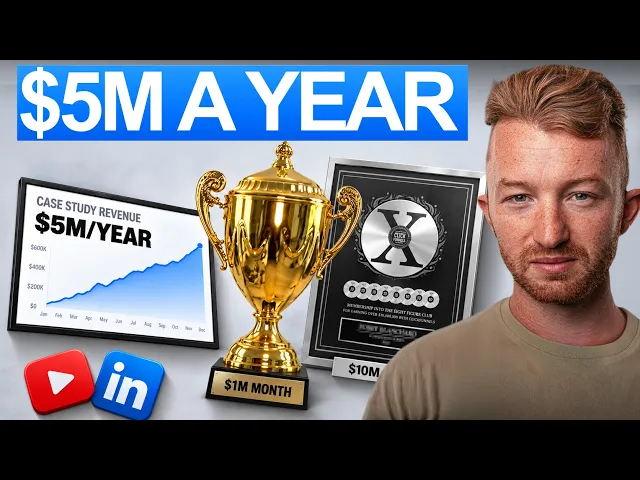
When I show a trophy or plaque, I am making a public association: I used something and got a result. The provider can use that association as a case study, and the result is there for someone else to inspect. The award is a visible sign of the relationship, not a guarantee of what another buyer will achieve.
For an agency, that starts with the work. I need a client result before I have a useful case study. A stronger promise on a sales page does not create the evidence by itself.
Client Ascension related reading: the first-client lesson addresses beginning without case studies.
Client fit affects which results can become proof
I cannot separate the provider's skill from the opportunity inside the client's business. The service can be the same, but the conditions for getting a useful result are different. That is why client fit belongs in the discussion about proof.
An established provider with strong case studies may be able to select businesses that a beginner cannot yet attract. I want you to notice that difference before comparing two providers only by how often their clients become case studies.
The ladder is an illustration, not a conversion benchmark
Imagine an early provider taking ten clients to obtain a case study, then five for a stronger one and later two. I use those counts to illustrate a ladder, not to give you an observed success rate or a schedule to expect.
The first piece of proof can help attract a more suitable client. Work with that client can produce stronger evidence, which may open another opportunity. That is the flywheel I want you to understand: the connection between the work, the opportunity and the next piece of proof.
Protect the delivery capacity spent on useful work
If I let a difficult, poor-fit client consume the business's attention, that leaves less time for clients with stronger opportunities. My advice is to stop letting the wrong relationship absorb so much of the work and put more effort into the businesses the service can help.
Being selective can mean declining a client who is ready to pay. I want to know whether the service can realistically get a result for that business, rather than assume accepting every available deal is the best way to grow.
Client Ascension related reading: the dollar per effort lesson considers compensation alongside the workload and attention an arrangement consumes.
Choose the scope and price model deliberately
I see two distinct paths: higher-volume productized work, or a lower-volume service with much more involvement. A defined, repeatable ad-creative package is different from also handling strategy, landing pages, media buying, filming and editing.
The problem is taking on the larger customized workload while charging as though it were a small repeatable package. I want the scope, pricing and choice of client to match. Productized does not automatically mean cheap; it means a more finite and repeatable piece of work.
Client Ascension related reading: the logistical intensity lesson examines removing implementation work from the buyer.
Use the evidence in front of suitable prospects
For the selective route, I can lead with a strong case study and put it in front of highly qualified businesses through content or advertising. The case study becomes the center of the proposition: here is the work and the outcome this business achieved.
Building that proof may take far more client engagements than you first expect. I want patience for the sequence of doing the work, obtaining evidence and improving the opportunity. A published case study is not a promise of a particular income or the same future result.
Client Ascension related reading: the differentiation lesson connects a clear proposition, client proof and repeated exposure.
Adapted by Client Ascension with AI assistance from Daniel Fazio's lesson. The first-person narrative follows the source speaker’s account. Watch the original video





