
Business Growth
How I Turn Client Results Into Case Studies and Use Them in Sales
· Updated
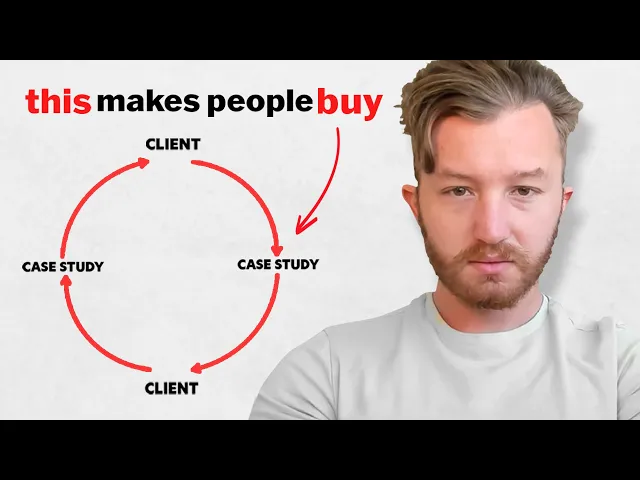
I think of client delivery and future acquisition as a loop. Do the work, document the result and use that evidence to help another prospect evaluate the service. Signing a client is not the finished achievement if the work never produces something meaningful to show.
The depth of the case matters. A prospect needs to understand what happened and why it is relevant to what they are buying, rather than only see a pile of compliments or names. I wanted the proof to make the service more concrete during the sales process.
Give the buyer an outcome they can understand
I criticized examples that only said leads had increased, lead cost had fallen or someone enjoyed working with the provider. Those statements can leave the end result unclear. For the B2B services I was discussing, I wanted the case to show whether the work led to the result the client actually sought.
That result is not always money. In my earlier Instagram-growth agency, conversations with fitness coaches changed my understanding of what they wanted: the audience cared about followers. The case should address the outcome the buyer values rather than impose a metric the seller assumes matters.
Depth changes the context of the price conversation
The point of the pricing examples was comparison. If a prospect has seen a substantial result produced by the service, the price is evaluated in that context. A small result against a large fee presents a different case from a deeper, relevant result against the same fee.
I preferred proof over a guarantee if forced to choose only one, while saying both could be useful. The proof explains what has happened; a guarantee describes terms around what will happen if an agreed result is not delivered. They are different parts of evaluating an offer.
Client Ascension evidence note: a past result does not establish that a new buyer will achieve the same outcome.
Put the result where the reader can see it
On a case-study page, I wanted the meaningful result prominent in the headline, with the person’s name supporting it rather than hiding the outcome under a large name. The reader needs a reason to open the case and understand what it demonstrates.
I used my own result-led case headlines as examples. The lesson was the hierarchy of information, not that any large number could be pasted into a headline without the underlying case. The result and the story need to refer to the same work.
Client Ascension related reading: Dan’s HubSpot agency case study describes a specialist offer, repricing and partner channels. It is an example of an operator story whose underlying business changes matter alongside the headline result.
Agree on a proof-building project’s purpose before doing the work
For a beginner considering free client work, I said the intention needed to be explicit: the work was being done to produce a case study, and the client needed to agree to share the relevant metrics and results. Otherwise the operator could do the project without the information needed to document it.
That was a particular early-stage arrangement I discussed, not a reason to assume that every client must be free or that a new agency can immediately demand a large long-term commitment without proof. The work still has to produce a real result before it becomes evidence.
Client Ascension related reading: Ayman’s content-agency case study describes free-sample outreach, his own content, one-off projects and hiring. A sample used to start a conversation is distinct from claiming a completed client result.
Build the evidence before expecting it to help the next sale
Acquiring a case takes time because competence, delivery and a result have to come first. I warned against trying to skip directly to a premium price or a revenue-share label without evidence that the work can help the buyer. Renaming the agency relationship does not create proof.
My case-study-machine idea was the repeating connection between client results and future clients. The work, documentation and sales use belong together. If the current project does not yield results, the next acquisition conversation cannot honestly treat it as a success story.
Client Ascension related reading: the VSL breakdown explains supporting evidence, the proposed result, system mechanics, objections and handoff in a sales presentation. It is one place to connect a relevant case to the offer being explained.
Adapted by Client Ascension with AI assistance from Daniel Fazio's lesson. The first-person narrative follows the source speaker’s account. Watch the original video





