
How I Built an Email Lead-Generation Agency and Rebuilt Fulfillment
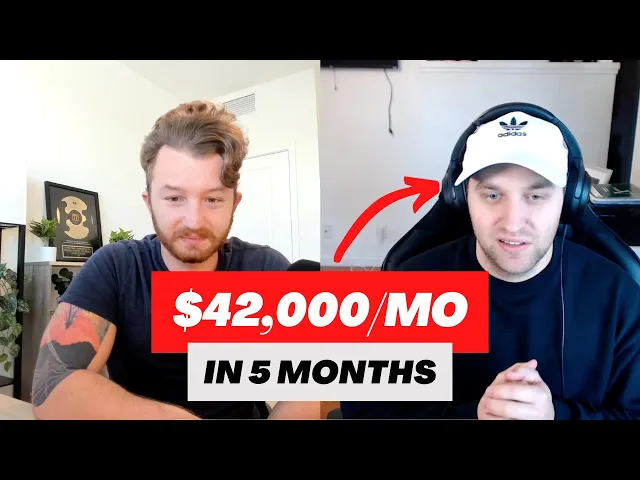
I'm Dillon. We help financial professionals generate leads through email. About five months after starting the agency, I put the monthly business figure at roughly $40,000–$42,000 in the interview. I did not provide a profit breakdown.
I had run email campaigns for other people before and had previously sold another company. The agency was new, but the underlying skill was not completely new to me. The hard part was building a service that we could keep delivering as clients came in.
Getting clients exposed the fulfillment problem
We brought clients in, then lost a substantial part of that early group and stayed around a smaller base for a while. I was overwhelmed with fulfillment and had reached the point of wanting to walk away from the business.
The response was to rebuild the way the work ran. With Andre's help, I put together a Trello board to streamline fulfillment and brought in a virtual assistant. After that reset, we grew the client base again.
The partner split did not remove the need for a process
I had a partner who handled sales and more of the client-facing work. We both worked on the back end. Even between us, the service needed a clearer way to run.
We did not let clients handle their own email replies. We brought in an inbox manager as part of the support around the service. That was one of the concrete staffing changes I described alongside the virtual assistant and the fulfillment board.
Client Ascension related reading: the acquisition guide explains choosing a channel for an offer and judging cost per client over a full sales cycle.
I looked for buyers with a business that could support the service
One of our prospecting filters was employee count. We also sometimes used company-revenue filters, but the database information was not always filled in. That meant changing the filters when the available data did not tell the whole story.
I also mentioned lean consultants who were doing well. Sometimes we removed the filters and got very specific about what the business did. Employee count was not the only way we looked for a prospect with a business that could pay for the service.
Building the system still took concentrated work
Campaign builds could mean a very heavy week of work. We were still trying to systematize that process, and creating the system and explaining it to someone else could be painful upfront.
I hoped the next round of campaign builds would be easier than the previous one. That was work in progress. I also spent available time thinking about how to bring more opportunities into the business.
I wanted more opportunities flowing into the sales process
My partner handled sales, and I enjoyed finding ways to funnel more people toward those calls. I wanted to spend more time on acquisition, but operations still needed our attention. We were still working on making delivery easier.
For us, bringing in more prospects had to sit alongside fulfillment that could support the clients we won. The changes to the board, support roles and inbox handling were practical parts of that transition.
Client Ascension related reading: the VSL breakdown examines the decisions and objection handling inside a complete sales presentation.
Client Ascension related reading: Alex Tenorio’s case study provides another professional-services example, explaining his fractional CFO offer, consistent outreach and business systems.
Adapted by Client Ascension with AI assistance from Dillon's interview. The first-person narrative follows the source speaker’s account. Watch the original video





